 Art
Art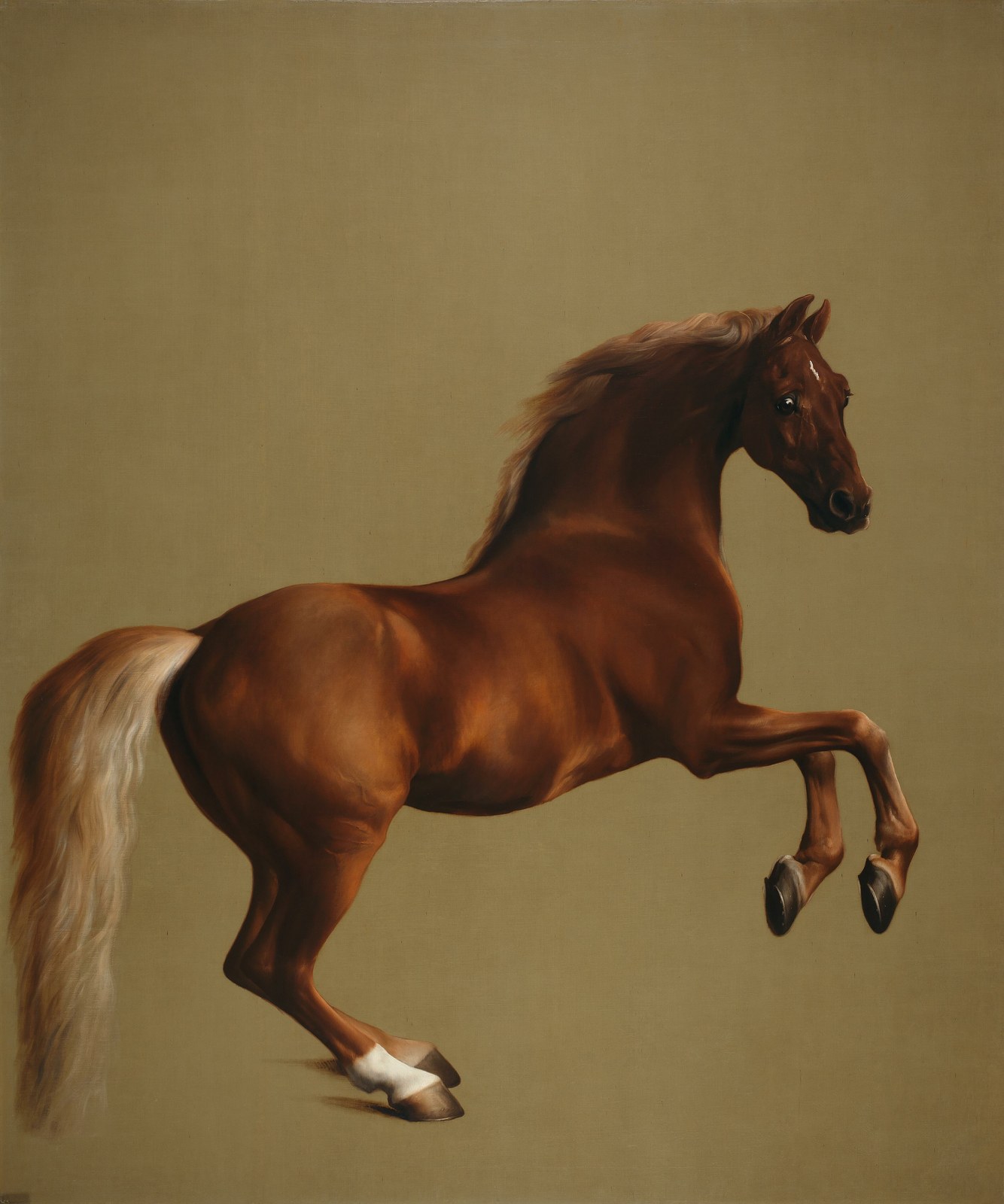
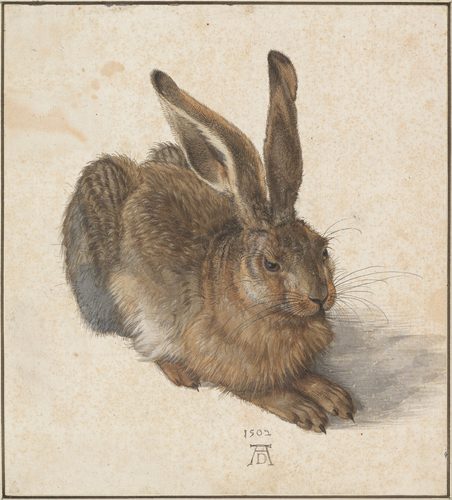
Animal art is a painting in which an animal — wild, domestic, or hunted — is the primary subject, studied and staged with the same seriousness once reserved for human sitters. The genre exists because animals mattered enormously to the people who commissioned art: a prized racehorse or hunting dog was proof of wealth and taste, a lion or exotic creature was a trophy of exploration and empire, and wildlife itself was a subject of scientific fascination as natural history expanded. Aristocratic patrons commissioned portraits of specific, named animals, painted with the same individualizing care as a human sitter, right down to a particular gleam in the eye or set of the ears. Naturalists and scientific expeditions commissioned precise studies of newly encountered species for documentation as much as decoration. Because the genre straddled portraiture, still life, and landscape, ranking low in the academic hierarchy between landscape and still life, it was often judged by its human subtext — a hunting scene borrowed history painting's drama, a farmyard scene behaved like genre painting.
The rules of the genre
Individualized Likeness
A prized horse, hound, or falcon is painted as recognizably itself, with a particular coat pattern, stance, or marking, treated with the same specificity as a human portrait sitter rather than a generic type.
Anatomical Precision
Musculature, fur texture, feathers, and posture are rendered with close observational accuracy, since a convincing animal depended on getting proportions and movement right in a way viewers could judge instantly.
Trophy Staging
Hunted or exotic animals are often posed as prizes — a dead stag arranged with game birds, a caged lion, a captured creature on display — announcing the owner's wealth, conquest, or curiosity.
Landscape Habitat
Wild animals are placed within a believable natural setting — a specific terrain, weather, or vegetation — grounding an exotic creature in a plausible environment rather than a blank, neutral background.
Human-Scale Companions
Domestic animals are frequently shown beside a human handler, groom, or hunter, whose scale and gesture help establish the animal's size and temperament for a viewer who may never see it in person.
Expressive Eyes
The eye is painted with special care to suggest alertness, wildness, or loyalty, giving even a dangerous predator or a working dog a legible personality the viewer can read at a glance.
Symbol decoder
How to read a animal art
- Dog
- → Represents fidelity and loyalty, especially common resting at the feet of a portrait sitter.
- Horse rearing
- → Signals martial power and command, frequently paired with a military or noble rider.
- Caged exotic animal
- → Announces conquest, exploration, or menagerie ownership as a display of wealth and reach.
- Dead game
- → Marks a successful hunt and, by extension, the sitter's or owner's status and skill.
- Lion
- → Represents courage, sovereignty, or nobility, often used heraldically alongside a ruler.
- Falconry bird
- → Signals aristocratic leisure through falconry, a sport restricted to the nobility.
The story
Animals appear in art from prehistoric cave paintings onward, but animal art matured as a specialized genre in the seventeenth century, when Flemish and Dutch painters built careers around hunting scenes, menageries, and prized livestock, and English painters later specialized almost entirely in sporting art devoted to horses and hounds. Royal and aristocratic patrons commissioned portraits of specific champion horses and favorite dogs with the same seriousness as a family portrait. The genre gained scientific weight as naturalists and expedition artists documented newly encountered species for scholarly publication, blurring the line between art and illustration. Academic theory ranked animal painting low, above still life but below landscape, even though in practice it could behave like history painting in a dramatic hunt, like portraiture in a named champion, or like landscape in a wildlife study. Its market stayed strong regardless of academic snobbery, driven by wealthy patrons who simply wanted their finest horse or hound remembered on canvas.
Masterpieces of the genre
| Work | Artist | Date | Why it matters |
|---|---|---|---|
| Whistlejacket | George Stubbs | 1762 | A rearing racehorse painted life-size against a plain background, isolating pure animal form with no rider or setting. |
| The Horse Fair | Rosa Bonheur | 1852–55 | A muscular procession of horses being paraded and sold, painted with rare anatomical authority for a woman artist of her era. |
| Monarch of the Glen | Edwin Landseer | 1851 | A stag surveys misty highland terrain, becoming one of the most reproduced images of noble wildlife ever painted. |
| Wolf and Fox Hunt | Peter Paul Rubens | c. 1616 | A churning, muscular hunt scene where hounds, horses, and prey collide in dramatic motion. |
| The Peaceable Kingdom | Edward Hicks | c. 1826–1849 | Predators and prey lie together in dozens of variations on a hoped-for, harmonious natural order. |
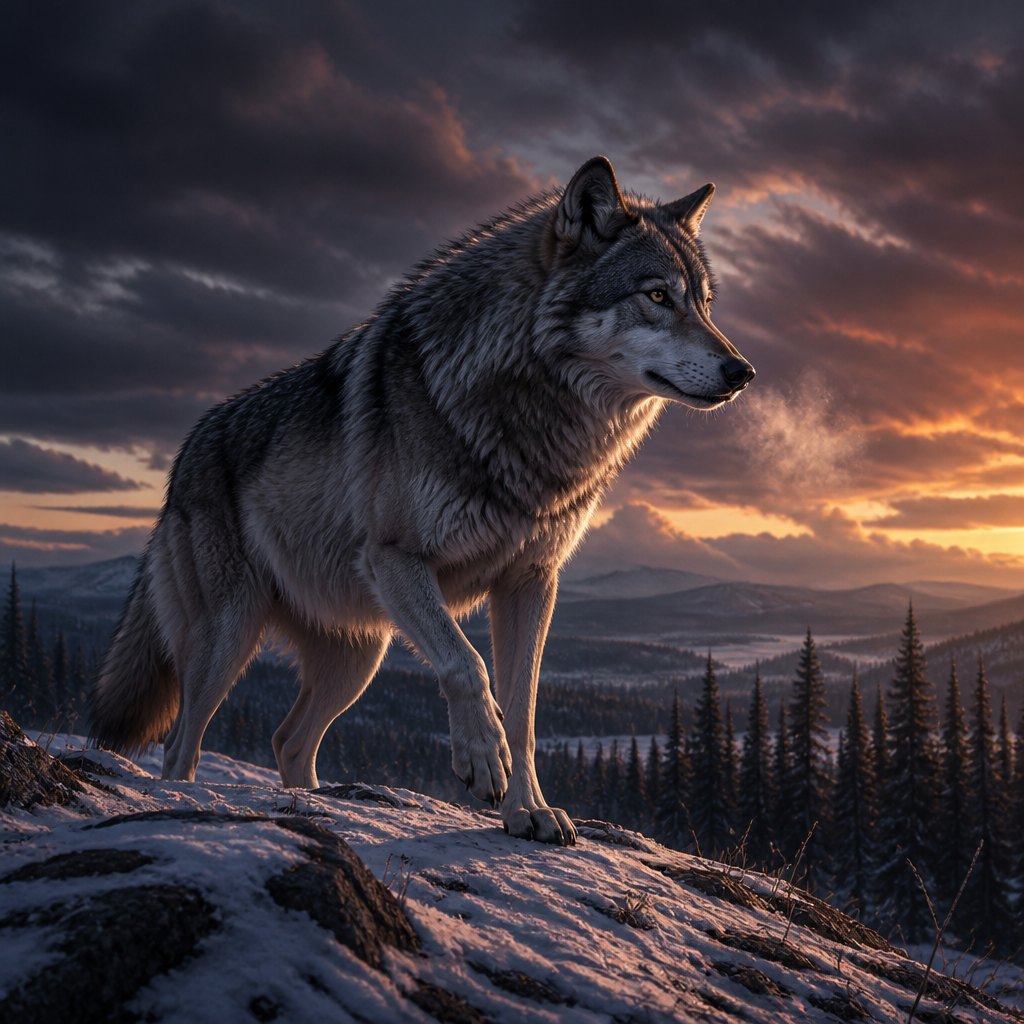 AI-generated
Paint your own
Hang your own animal art in the salon
This example was generated from a prompt like: “An imagined gray wolf standing alert on a snow-dusted ridge at dusk, muscles tensed mid-stride, breath visible in cold air, distant pine forest below, dramatic side lighting catching its fur texture.”
Open the Wildlife Nature Art generator →The genre today
Animal art's instincts now live in wildlife photography, nature documentaries, pet portraiture, and natural history illustration, all of which still individualize a specific creature the way a champion horse once was. Veterinary and zoological illustration keeps the genre's scientific precision alive. In AI image generation, prompts for wildlife or pets lean on the same old formula: a specific animal rendered with anatomical accuracy, expressive eyes, and a believable habitat, whether a family dog or an imagined creature roaming distant terrain.
Compose your own
Study the animal's anatomy closely enough to get proportion, gait, and musculature convincing, since viewers judge animal accuracy instantly and instinctively. Give the eye extra care — it carries most of the perceived personality, whether alert, wild, or loyal. Choose a pose that shows the creature at its most characteristic: a horse rearing, a hound alert, a predator mid-stalk. Place the animal in a habitat or setting specific enough to feel real, with terrain and light matched to the species. If including a human handler, keep them secondary in gesture and scale so the animal remains the clear subject. Fur, feathers, or scales benefit from directional light that reveals texture without flattening the form.
Frequently asked questions
What is animal art?
Animal art is a painting in which an animal — wild, domestic, or hunted — is the main subject, rendered with individualized, portrait-like attention rather than as a minor detail beside a human figure.
Why were some animals painted like portrait sitters?
Prized horses, hounds, and falcons belonged to wealthy or noble owners who wanted them remembered as individuals, with a particular coat, stance, or marking, the same way a family member might be commemorated.
Is animal art the same as wildlife illustration?
They overlap but differ in purpose: animal art prioritizes drama, character, and staging for an owner or viewer, while scientific illustration prioritizes documentary accuracy for naturalists and researchers studying a species.
Where did animal art rank in the academic hierarchy?
Academies placed it low, above still life but below landscape, even though in practice it could borrow history painting's drama in a hunt scene, portraiture's individuality in a named champion, or landscape's setting in a wildlife study.