 Art
Art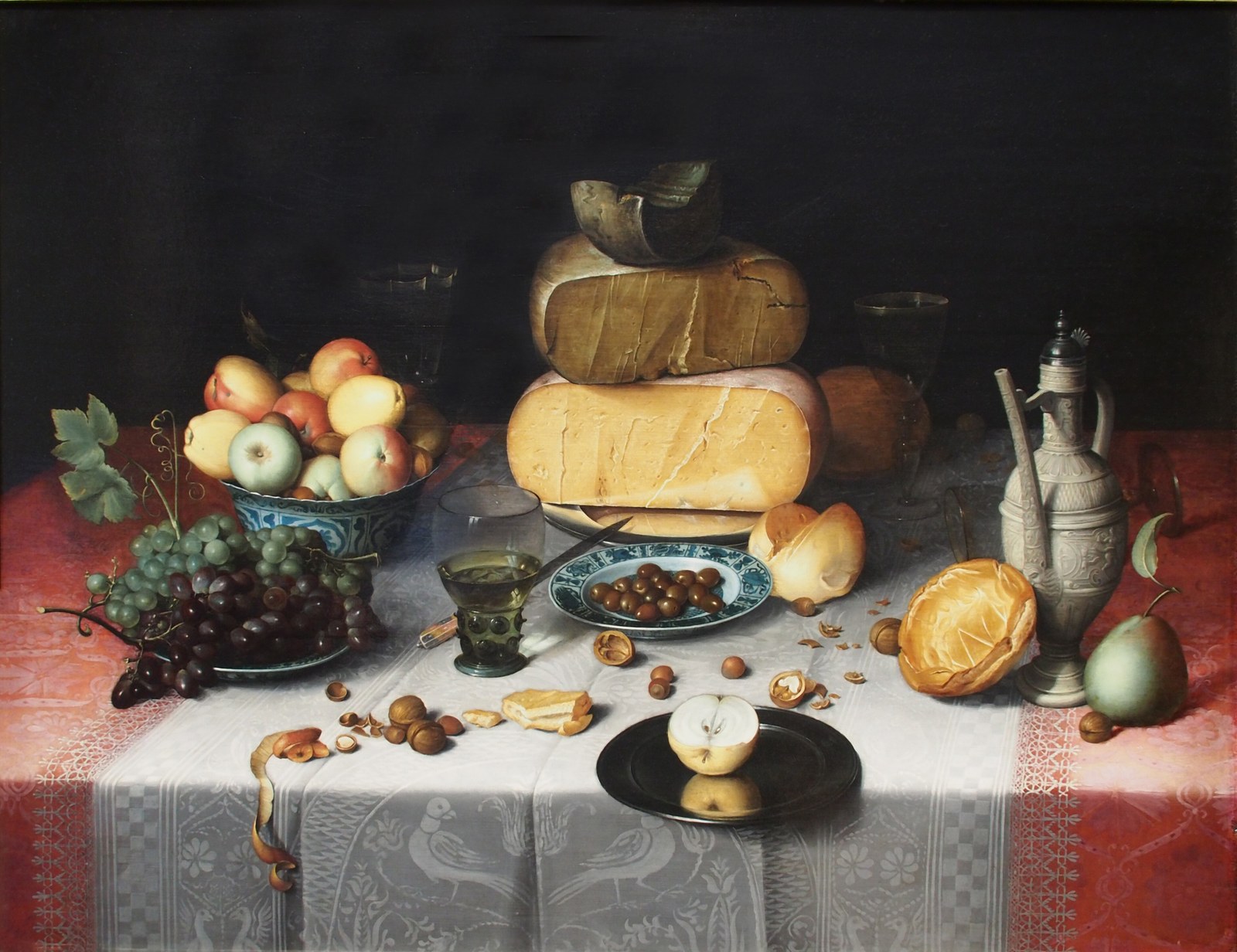
A still life is a painting of arranged, inanimate objects — fruit, flowers, tableware, books, dead game, or a skull — composed and lit as the entire subject, with no human figure required to justify their presence. The genre exists because painters realized that ordinary things, studied closely enough, could carry as much meaning and technical showmanship as any grand narrative: a glass catching light proved mastery of translucency, a wilting petal proved mastery of observation. Wealthy merchants, especially in the Dutch Republic, commissioned still lifes to display and quietly boast about their possessions, imported delicacies, and refined taste, while other still lifes used the same objects to warn against exactly that vanity. Flowers that would never bloom together in the same season were painted side by side from separate studies, prized for botanical accuracy rather than a single truthful moment. Because the objects were chosen and arranged rather than found, every still life is a small, deliberate argument about what its owner valued, feared, or wanted remembered.
The rules of the genre
Deliberate Arrangement
Every object is placed, not found — fruit stacked, flowers angled, a knife left hanging off the table's edge — building a composition that looks casual but is calculated down to the last shadow.
Raking Side Light
A single strong light source from one side rakes across the objects, carving out texture, transparency, and reflection in glass, metal, and fruit skin, all set against a dark, undefined background.
Table's-Edge Framing
The arrangement sits on a tabletop that meets the very bottom of the canvas, with an object often teetering over the edge toward the viewer, collapsing the distance between painting and room.
Signs of Decay
A curling leaf, a bruised peach, a fly landed on fruit, or melting wax all mark time passing within an otherwise frozen scene, a quiet reminder that nothing painted here will last.
Material Showmanship
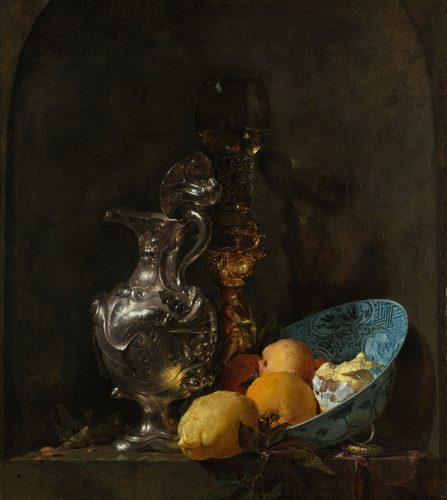
Painters chose objects specifically to display technical range — glass for transparency, silver for reflection, velvet for texture, fruit skin for translucency — turning the still life into a résumé of skill.
Compressed Space
The arrangement is pushed close to the picture plane with almost no background depth, keeping every object legible and forcing intense focus on surface, texture, and the objects' relationships to one another.
Symbol decoder
How to read a still life
- Skull
- → The most direct memento mori, a blunt reminder that death comes to everyone regardless of wealth.
- Wilting flower
- → Marks the passage of time within a frozen scene, hinting that beauty and life are already fading.
- Extinguished or guttering candle
- → Represents a life recently ended or time running short, a quieter cousin of the skull.
- Overturned glass
- → Suggests interrupted pleasure, waste, or a life cut short mid-enjoyment.
- Imported fruit or shells
- → Advertises wealth, trade networks, and access to luxury goods from distant lands.
- Insect on fruit
- → A small intrusion of decay and mortality into an otherwise perfect, tempting arrangement.
- Pocket watch or hourglass
- → Makes the passage of time explicit, reinforcing the vanitas warning against earthly attachment.
The story
Still life elements appear in ancient Roman wall paintings and manuscript borders, but the genre became independent in sixteenth- and seventeenth-century Netherlands and Flanders, where painters specialized narrowly in flowers, banquet tables, or hunting trophies and sold directly to a prosperous merchant class. A distinct strand, the vanitas, used the same objects to moralize against the very wealth other still lifes celebrated, reminding buyers that possessions and pleasures were fleeting. Spain developed a starker, more austere still-life tradition built around a handful of humble objects in deep shadow. Ranked lowest in the academic hierarchy because it required no invention, imagination, or narrative, still life was nonetheless a proving ground for technical virtuosity, and some painters built lucrative careers on it despite the institutional snobbery. Its reputation rose dramatically in the late nineteenth and twentieth centuries, when painters used arranged objects to investigate form, color, and abstraction rather than illusionistic display.
Masterpieces of the genre
| Work | Artist | Date | Why it matters |
|---|---|---|---|
| Basket of Fruit | Caravaggio | c. 1599 | One of the earliest independent still lifes, its leaves shown curling and worm-eaten with unflinching honesty. |
| Sunflowers | Vincent van Gogh | 1888 | A series of flower still lifes using thick, expressive paint to turn a simple bouquet into raw emotional intensity. |
| The Basket of Apples | Paul Cézanne | c. 1893 | Tilted perspective and shifting viewpoints turn a simple fruit arrangement into an investigation of form itself. |
| Still Life with a Late Ming Ginger Jar | Willem Kalf | c. 1669 | Luxurious imported objects glow against near-black shadow, showcasing Dutch mastery of reflected light. |
| Vanitas Still Life with a Tulip, Skull, and Hourglass | Philippe de Champaigne | c. 1671 | A tulip, a skull, and an hourglass reduce the vanitas message to its barest three symbols. |
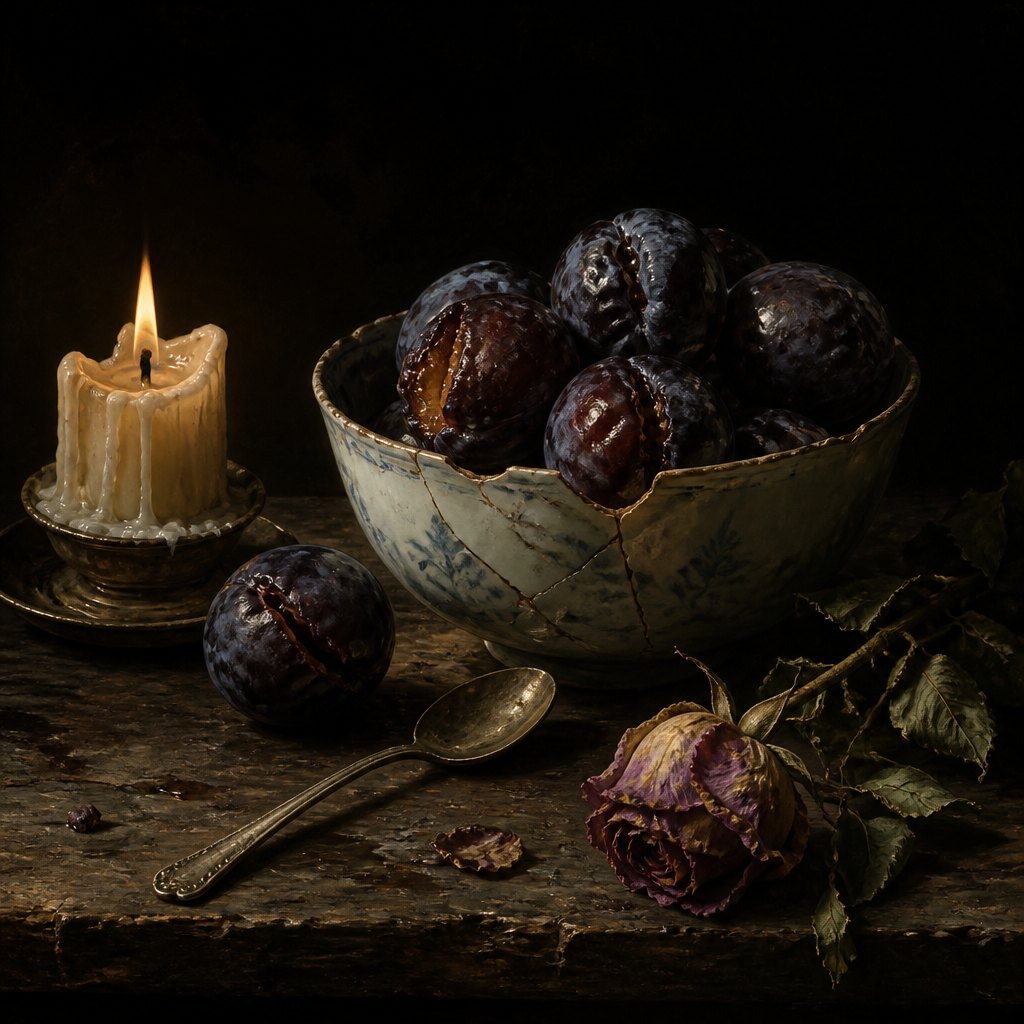 AI-generated
Paint your own
Hang your own still life in the salon
This example was generated from a prompt like: “An imagined tabletop arrangement of a cracked porcelain bowl of overripe plums, a half-melted candle, a tarnished silver spoon, and a wilting rose, lit from one side against a near-black background.”
Open the Dutch Golden Age Still Life Art Style generator →The genre today
Still life's discipline of arranging and lighting objects carries directly into product photography, food styling, and advertising, all of which stage inanimate things to look desirable or meaningful. Album covers and editorial photography borrow its dramatic single-source lighting constantly. In AI image generation, still life remains a reliable test of an image model's grasp of texture and light, since glass, fruit skin, and reflective metal on a dark tabletop are exactly the material challenges the genre was built to showcase.
Compose your own
Choose a small group of objects with contrasting materials — glass, metal, fruit, fabric — so each surface reflects or absorbs light differently. Arrange them deliberately on a tabletop close to the bottom edge of the frame, letting one item tip slightly over the edge toward the viewer for intimacy. Light from a single strong source at an angle, carving shadows that reveal texture and form rather than flattening everything evenly. Keep the background dark and empty so nothing competes with the objects. If aiming for a memento-mori mood, include one sign of time passing: a wilting petal, a guttering candle, an overturned glass. Push the camera close enough that surface detail, not the wider room, carries the composition.
Frequently asked questions
What is a still life painting?
A still life is a painting of arranged, inanimate objects — fruit, flowers, tableware, books, or a skull — composed and lit as the entire subject, with no human figure needed to justify their presence.
What is a vanitas still life?
A vanitas is a still life that uses objects like a skull, guttering candle, or wilting flower to warn viewers that wealth, pleasure, and life itself are temporary, no matter how beautifully they're painted.
Why did still life rank lowest in the academic hierarchy?
Academies believed still life required no invention or narrative, only observation and technical skill, so it was ranked below history painting, portraiture, genre painting, and landscape despite its enormous technical demands.
Were still life flowers always painted from real bouquets?
Rarely as a single arrangement. Flowers that bloom in different seasons were often studied separately and combined on canvas, prized for botanical accuracy across an entire year rather than a single truthful moment.