 Art
Art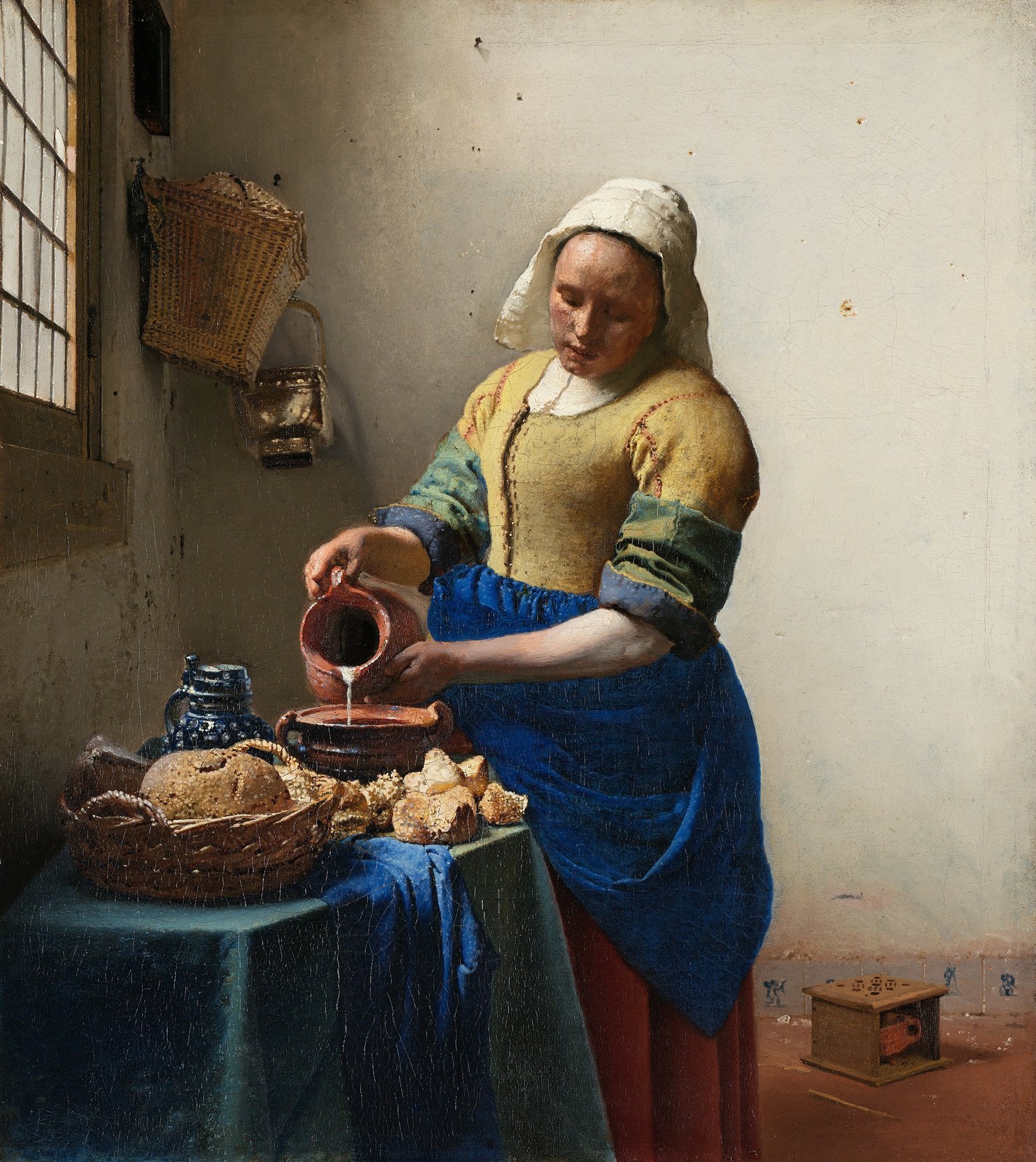
Genre painting is a scene of anonymous, ordinary people doing everyday things — cooking, drinking, flirting, working, playing cards — with no named subject and no grand mythological or historical pretext. The genre exists because painters and buyers alike found real, observed life just as compelling as scripture or ancient history, and because a rising merchant class wanted art that reflected their own world rather than palace ceremony. Dutch and Flemish burghers were its biggest early market, hanging small, cabinet-sized scenes of tavern brawls, quiet domestic interiors, or bustling markets in their own homes. Unlike a portrait, no individual sitter is being honored; unlike history painting, no lesson from antiquity is being illustrated. Instead the genre often smuggled in its own quiet morality — a drunk collapsed at a table, a maid caught idle, a couple flirting too openly — letting viewers enjoy the scene while also, if they chose, reading it as a warning.
The rules of the genre
Anonymous Subjects
No one in the scene is named or historically identifiable — figures are types (the innkeeper, the fishwife, the cardplayer) rather than portraits, which lets the scene stand for everyday life in general.
Domestic Interiors
Kitchens, taverns, and modest parlors recur as settings, rendered with loving attention to tile floors, hanging pots, and light through a window — the room itself becomes as important as the people in it.
Caught Mid-Action
Figures are shown mid-gesture — pouring wine, reading a letter, sweeping a floor — as if the viewer just walked in on a private, unposed moment rather than a formal sitting.
Quiet Moralizing
A tipped-over glass, an idle maid, or a couple leaning too close often hints at a proverb or moral warning, letting the picture work as both charming anecdote and gentle lesson about behavior.
Cabinet Scale
Genre paintings are typically small, meant for a private home rather than a public hall, inviting close, intimate viewing rather than the distant, theatrical scale that grand history painting demanded of its audience.
Everyday Light
Illumination is naturalistic rather than dramatic — daylight through a window, a single candle — grounding the scene in the ordinary rhythms of a real room instead of theatrical spotlighting.
Symbol decoder
How to read a genre painting
- Broom
- → Signals diligence and good housekeeping, or its absence when left idle in a corner.
- Overturned glass or jug
- → Marks a scene of drunkenness, carelessness, or a household in moral disorder.
- Letter being read
- → Suggests romance, absence, or news from a distant traveler, often a soldier or sailor.
- Caged bird
- → Represents a young woman's virtue or confinement, especially when a suitor is nearby.
- Card or dice game
- → Signals idleness, gambling, or moral temptation, often set in a tavern.
- Open window
- → Lets daylight and the outside world into the domestic scene, and sometimes hints at a woman's longing to leave it.
The story
Genre scenes appear on the edges of ancient and medieval art, but the category matured in sixteenth- and seventeenth-century Flanders and the Dutch Republic, where a newly wealthy merchant class had money to spend on art but no interest in commissioning saints or emperors. Painters specialized narrowly, some devoting entire careers to tavern scenes, others to quiet domestic interiors or bustling market stalls, selling directly to a broad public rather than working for church or crown. Spanish and French painters developed their own strands around kitchen and street scenes. Because it depicted the observed rather than the invented, genre painting sat low in the academic hierarchy, prized by collectors but considered less intellectually demanding than history painting. That judgment reversed in the nineteenth century, when Realist painters championed everyday subjects as more honest than staged myth, and genre painting's close observation fed directly into Impressionism's interest in modern daily life.
Masterpieces of the genre
| Work | Artist | Date | Why it matters |
|---|---|---|---|
| The Milkmaid | Johannes Vermeer | c. 1658–61 | A maid pours milk in raking window light, turning a mundane chore into a study of quiet concentration. |
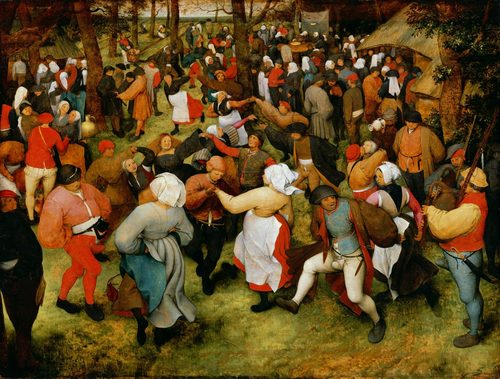
| The Peasant Wedding | Pieter Bruegel the Elder | c. 1567 | A crowded village feast packed with individualized figures eating, drinking, and squabbling. |
| Nighthawks | Edward Hopper | 1942 | A late-night diner scene of isolated strangers under harsh electric light, genre painting's twentieth-century American descendant. |
| A Bar at the Folies-Bergère | Édouard Manet | 1882 | A barmaid stands before a mirrored crowd, blurring the line between genre scene and portrait. |
| The Card Players | Paul Cézanne | 1890s | Peasants absorbed in a card game, stripped of anecdote and reduced to weight and geometry. |
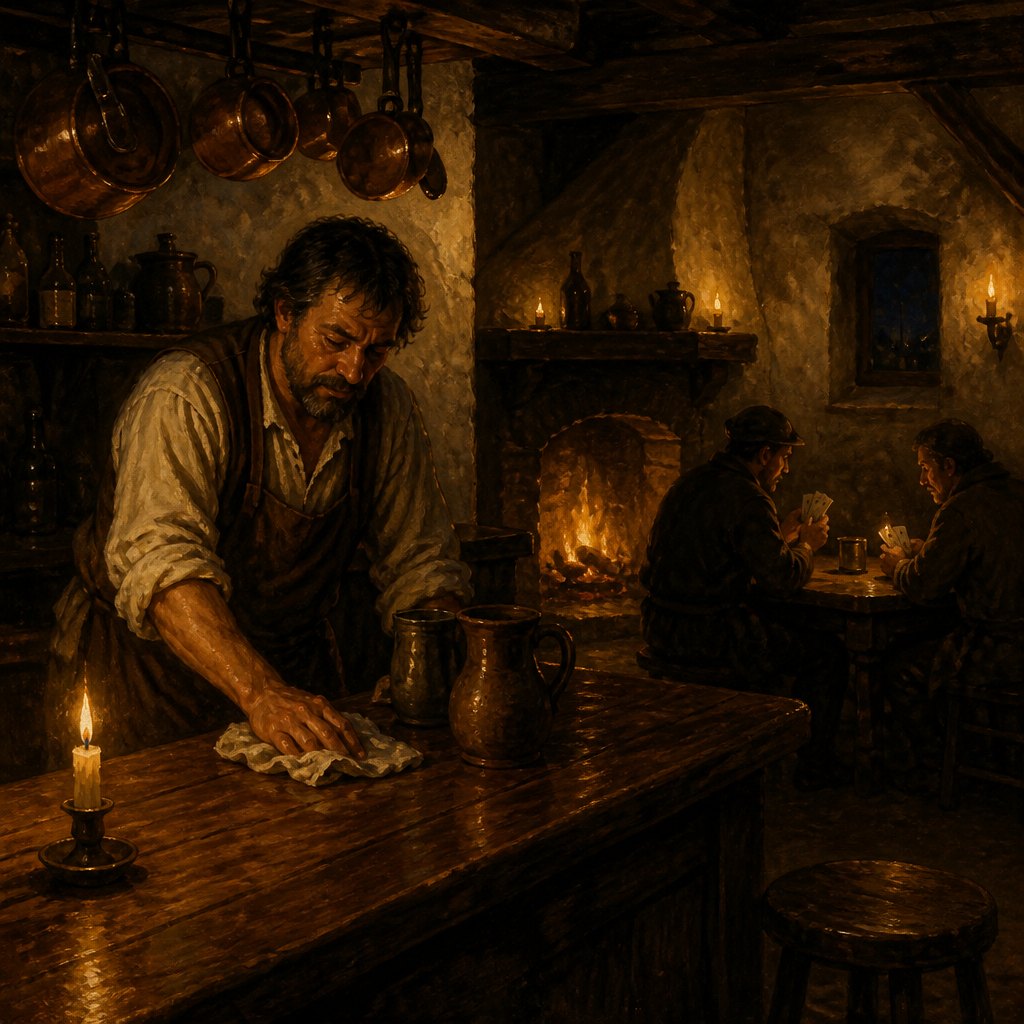 AI-generated
Paint your own
Hang your own genre painting in the salon
This example was generated from a prompt like: “An imagined candlelit tavern interior at night, an innkeeper wiping down a wooden counter while two anonymous patrons play cards at a corner table, warm firelight, hanging copper pots, rough plaster walls.”
Open the Genre Painting Art Style generator →The genre today
Genre painting's instincts run through photojournalism, street photography, sitcoms, and slice-of-life film and games, anywhere ordinary people are shown doing ordinary things without a mythic pretext. Documentary and candid photography inherited its interest in unposed, caught moments. In AI image generation, 'genre scene' prompts default to its old formula: a kitchen, a market, a tavern, anonymous figures mid-task, natural light through a window — everyday life still reads as worth looking at, even without a king or saint in the frame.
Compose your own
Set the scene in a lived-in space — a kitchen, tavern, market stall, or modest parlor — and populate it with one or two anonymous figures caught mid-task rather than posing. Let natural light, a window, doorway, or single candle, do the work of directing attention instead of theatrical spotlighting. Add small, telling props: a broom, a half-empty glass, a letter, a basket of vegetables, objects that hint at a story without spelling it out. Keep the composition modest and close rather than sweeping, as if the viewer just stepped into the room. A little imperfection helps: clutter, worn furniture, and unposed gesture all read as authentic daily life rather than staged spectacle.
Frequently asked questions
What is genre painting?
Genre painting depicts anonymous, ordinary people in everyday situations — cooking, drinking, working, playing games — with no named subject and no mythological or historical storyline, unlike portraiture or history painting.
How is genre painting different from a portrait?
A portrait honors a specific, identifiable individual, while genre painting shows anonymous types — a maid, a cardplayer, a tavern-goer — standing in for ordinary life rather than any one named person.
Why did genre painting become popular in the Dutch Republic?
A newly wealthy merchant class wanted art reflecting their own world rather than church or royal subjects, and small, affordable genre scenes of markets, kitchens, and taverns suited their homes perfectly.
Do genre paintings always have a hidden moral message?
Not always, but many Dutch and Flemish examples encode gentle warnings through props like a tipped glass or idle maid, letting the same scene work as charming anecdote and moral lesson at once.