 Art
Art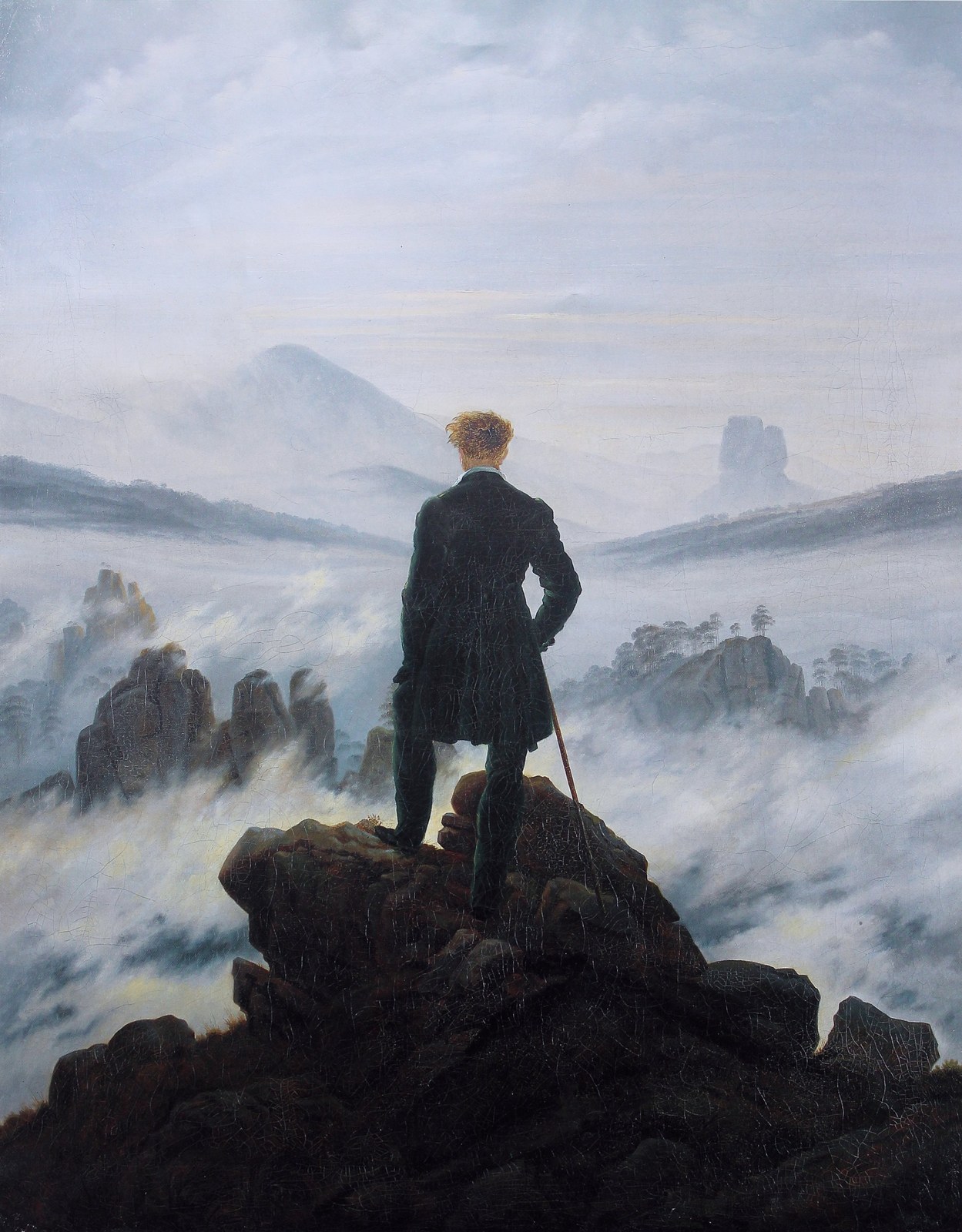
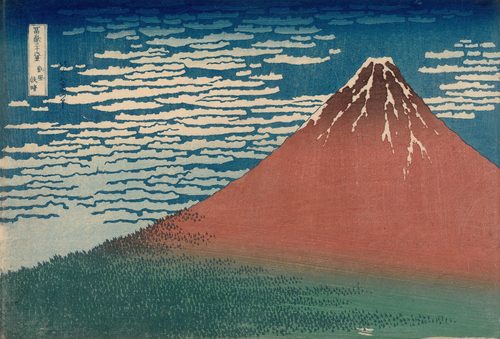
A landscape is a painting in which natural or built scenery — mountains, fields, forests, coastlines, ruins, weather — is the primary subject rather than a backdrop for a portrait or narrative scene. The genre exists because painters and patrons came to believe that nature alone, without any human story layered on top, could carry emotion, meaning, and beauty. Early landscapes crept in as settings behind saints and nobles before breaking free to stand on their own, prized first by wealthy collectors who wanted a view of a place they loved or admired, then by a growing middle class who simply wanted beauty on their walls. Some landscapes are topographical records of an actual, recognizable place; others are idealized or invented scenery arranged for maximum harmony or drama. The genre also carries philosophical weight, letting painters explore the sublime terror of a storm, the calm order of a cultivated field, or the melancholy of a ruin being reclaimed by weeds and time.
The rules of the genre
Layered Depth
Compositions build in three planes — a detailed foreground, a middle ground with the main action, and a hazy, blue-tinted background — using atmospheric perspective to create a convincing sense of distance.
Low or Distant Horizon
The horizon line often sits low in the frame, giving sky and light enormous presence, or the viewpoint climbs high to survey a sweeping vista rather than a single close view.
Small Human Figures
Tiny travelers, shepherds, or ruins-explorers are scattered through the scene less as subjects than as a scale marker, making the vastness of the natural world feel even larger by comparison.
Framing Devices
Trees, arches, or rock outcrops at the edges of the canvas act like a window frame around the view, a compositional trick called a repoussoir that pulls the eye into the distance.
Weather as Mood
Storm clouds, golden sunsets, or still morning mist do the emotional work a face might do in a portrait, telling the viewer how to feel about the scene before they notice any detail.
Idealized or Invented Views
Real locations are often rearranged, combined, or softened, moving a mountain closer or removing an ugly building, to build the most harmonious version of a place rather than a strict record.
Symbol decoder
How to read a landscape
- Ruined tower or abbey
- → Signals the passage of time and nature's slow reclamation of human ambition.
- Winding path
- → Leads the viewer's eye into the distance and often implies a journey or pilgrimage.
- Solitary tree
- → Stands in for endurance or isolation, often the tallest vertical element anchoring the composition.
- Storm clouds
- → Represent the sublime — nature's power to overwhelm and humble the viewer.
- Grazing livestock
- → Marks a cultivated, peaceful, pastoral landscape rather than untamed wilderness.
- Distant church spire
- → Anchors the scene to civilization and community just visible at the edge of nature.
The story
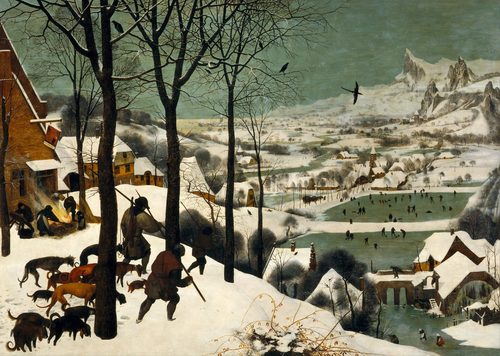
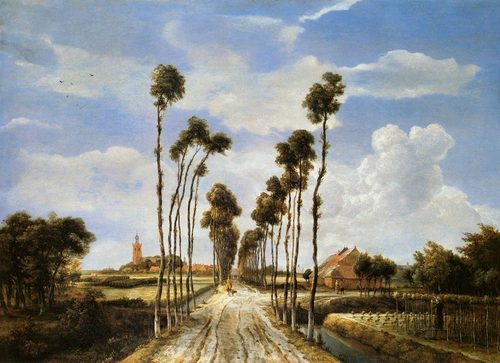
Landscape elements appear as backgrounds throughout ancient and medieval art, but the genre became independent in the Renaissance, when Northern European painters began treating scenery as worthy of a canvas on its own. Dutch painters of the seventeenth century built a thriving market for landscapes as their own subject, from flat polder fields to stormy seascapes. In France and Italy, an idealized classical landscape tradition arranged ruins, trees, and golden light into scenes of imagined antiquity. Academic hierarchy ranked landscape below history painting, since recording or inventing scenery required less narrative invention than a peopled drama, but the Romantic movement overturned that judgment, treating wild nature and the sublime as subjects equal to any human story. By the nineteenth century, plein-air painting and Impressionism pushed artists outdoors to capture fleeting light directly, cementing landscape as one of the most widely practiced and collected genres in Western art.
Masterpieces of the genre
| Work | Artist | Date | Why it matters |
|---|---|---|---|
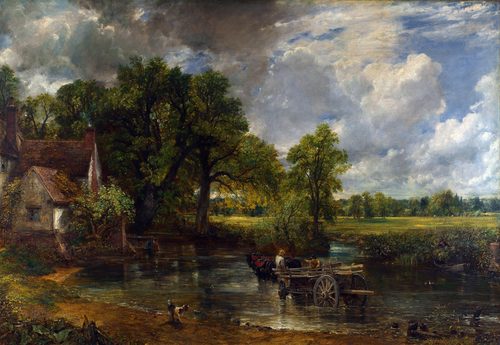
| The Hay Wain | John Constable | 1821 | A quiet English river scene rendered with such close observation of clouds and light it changed how landscape was painted. |
| Wanderer above the Sea of Fog | Caspar David Friedrich | 1818 | A lone figure surveys a mist-filled mountain view, the defining image of Romantic sublime landscape. |
| The Great Wave off Kanagawa | Katsushika Hokusai | c. 1831 | A towering wave dwarfs boats and even distant Mount Fuji, blending landscape with dramatic natural force. |
| Water Lilies | Claude Monet | 1890s–1920s | A series dissolving a garden pond into pure color and light, pushing landscape to the edge of abstraction. |
| View of Toledo | El Greco | c. 1596–1600 | A stormy, almost supernatural view of a real city, unusual for treating landscape as an independent subject so early. |
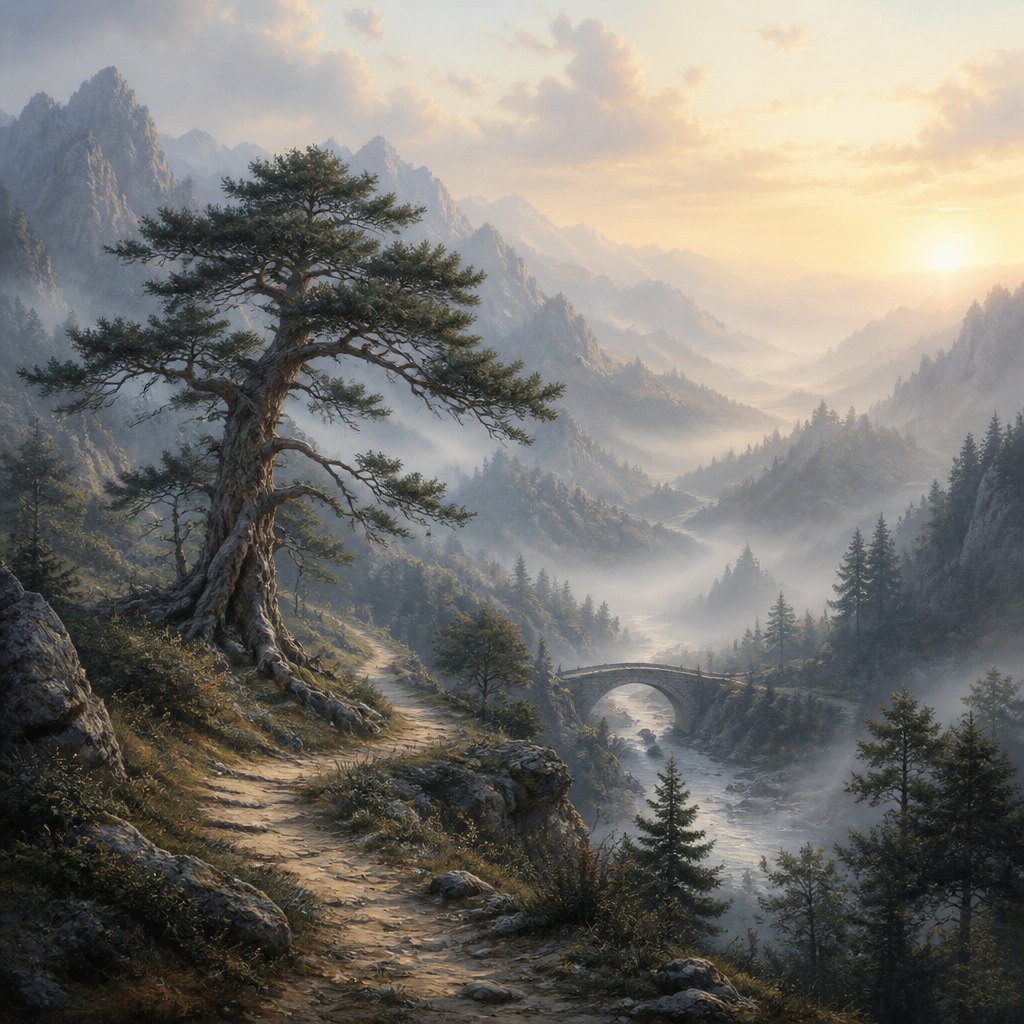 AI-generated
Paint your own
Hang your own landscape in the salon
This example was generated from a prompt like: “An imagined misty mountain valley at dawn, a winding dirt path leading past a solitary weathered pine toward a distant stone bridge, layered ridgelines fading into pale blue haze, soft golden light.”
Open the Realistic Landscape Art Style generator →The genre today
Landscape's conventions now shape nature photography, travel media, video game environment art, and film establishing shots more than gallery painting. Framing devices, atmospheric depth, and dramatic weather remain the default vocabulary for making a view feel worth looking at. It is also one of the most requested categories in AI image generation, where prompts for mountains, forests, and skies default straight to landscape's classic layered depth and golden, moody light, largely unchanged since the Romantic era.
Compose your own
Build the scene in three depth layers: a detailed, textured foreground, a middle ground carrying the main interest, and a soft, hazy, cooler-toned background. Keep the horizon low if the sky and weather are doing the emotional work, or high if you want a sweeping overview. Use a tree, rock, or archway at one edge as a frame that pulls the eye inward. Choose weather and light deliberately: storm clouds and raking light read as dramatic, soft mist and even light read as calm. A tiny figure or distant structure gives scale and makes the landscape feel vast rather than merely large. Let the horizon and light direction guide where every other element sits.
Frequently asked questions
What is a landscape painting?
A landscape painting depicts natural or built scenery — mountains, fields, coastlines, ruins, weather — as its main subject, rather than as a backdrop for a portrait or a narrative scene.
Are landscape paintings realistic depictions of actual places?
Sometimes, but many are idealized or invented, combining features from different views, moving elements for better composition, or inventing scenery entirely to achieve the most harmonious or dramatic version of a place.
Why do landscape paintings often include tiny human figures?
Small figures act as a scale marker, making mountains, forests, or skies feel vast by comparison, while keeping the human presence secondary to the natural or built scenery being depicted.
Why was landscape ranked low in the academic hierarchy?
Academies considered recording or arranging existing scenery less demanding than inventing a multi-figure narrative, though the Romantic movement later argued that nature and the sublime deserved equal artistic seriousness.