 Art
Art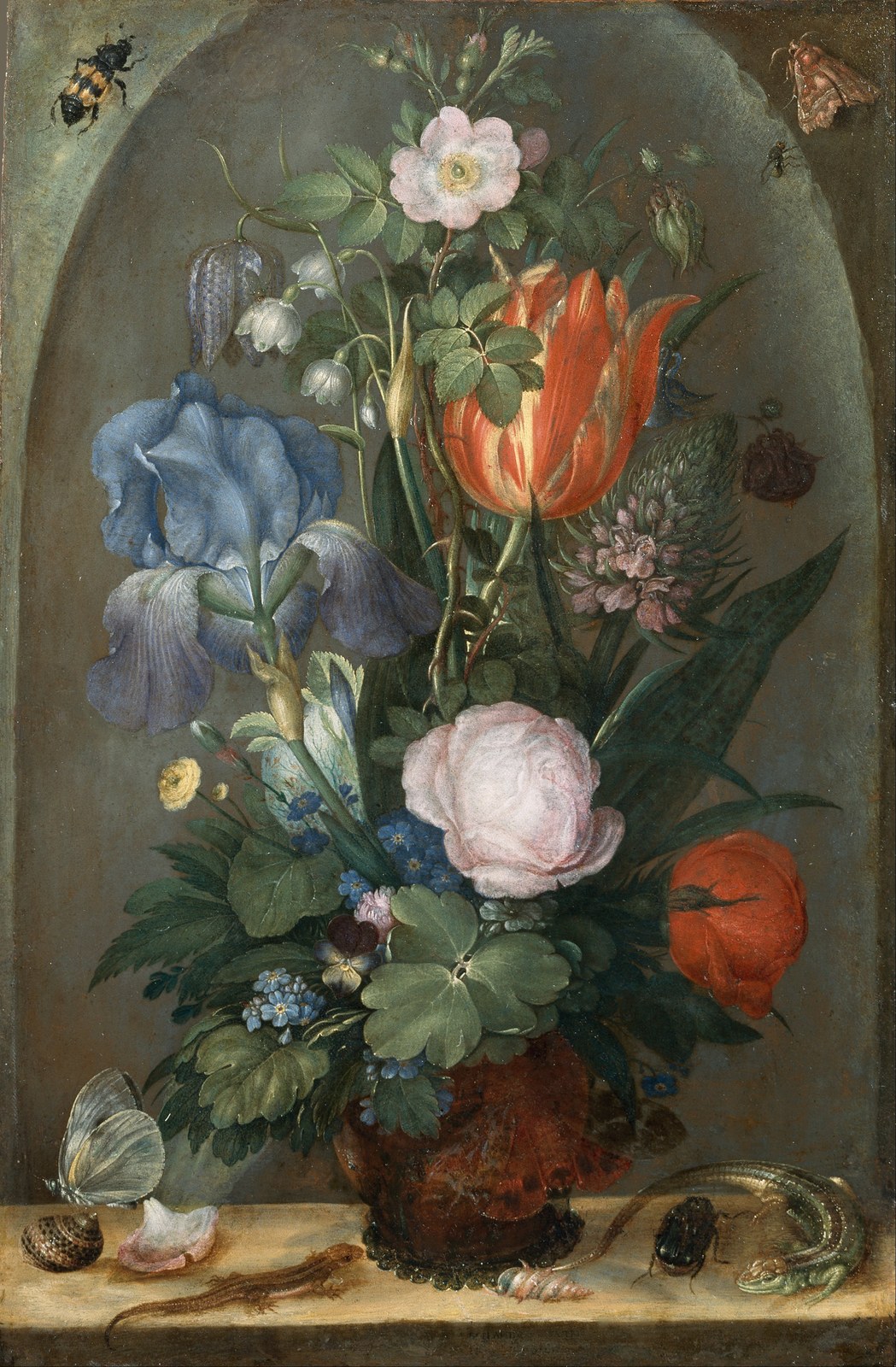
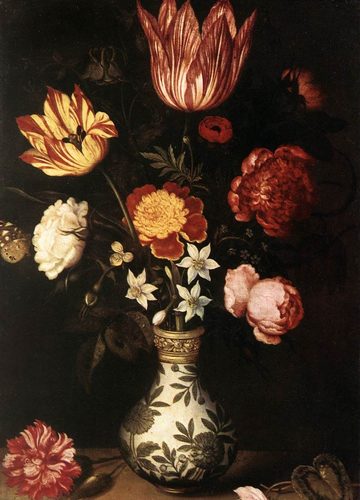
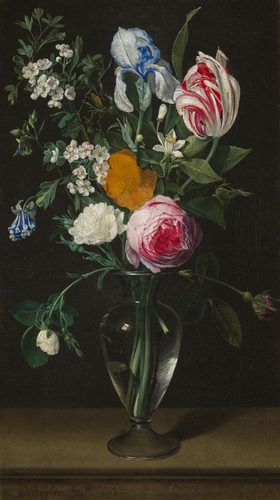
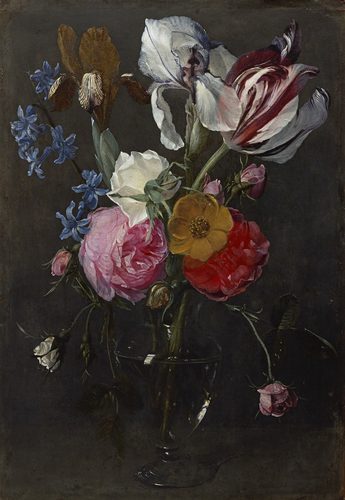
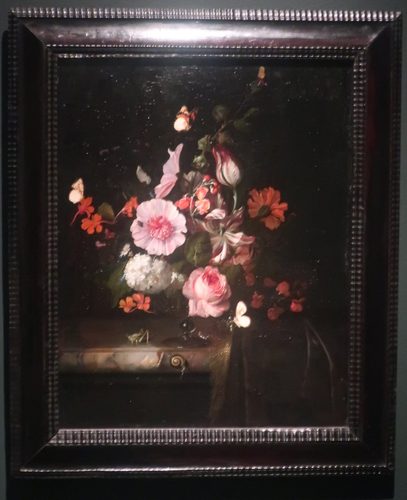
A flower painting is a work devoted to blossoms, arrangements, or gardens as its central subject, whether rendered as a tightly composed bouquet in a vase, a scattered spray on a plain background, or a scientifically precise botanical study. The genre grew out of overlapping traditions: religious paintings that used individual flowers as coded symbols, scientific illustration that demanded exact botanical accuracy, and the still-life market of the seventeenth-century Dutch Republic, where specialist painters built entire careers on elaborate floral arrangements that no real garden could have produced in a single season. Painters often combined blooms from different months into one impossible bouquet, prizing pictorial beauty and symbolic range over botanical truth. Flowers also carry an inherent memento-mori charge, since a cut bloom is already dying the moment it is painted, giving even the most decorative flower painting a quiet undercurrent of transience. The genre spans from devotional symbolism to pure decoration to modern abstraction, but always keeps the same close, patient attention to a flower's particular structure and color.
The rules of the genre
Impossible Seasonal Bouquets
Painters routinely combine flowers that bloom in different months into a single arrangement, prizing pictorial variety and symbolic range over botanical accuracy, since the finished bouquet never needed to exist in any real garden.
Insects and Small Creatures
A fly, butterfly, snail, or beetle often perches on a petal or leaf, adding both a naturalistic touch and a quiet reminder that decay and small predation are already beginning on the cut flowers.
Asymmetrical, Overflowing Arrangement
Bouquets lean and spill rather than sitting in tidy symmetry, with stems and blooms extending past the vase's rim to create a sense of abundance just barely contained by the composition.
Dark, Plain Background
A near-black or neutral backdrop isolates the flowers' color and detail, letting petals and leaves read with maximum clarity and giving the arrangement a stage-lit, almost theatrical presence against the emptiness behind it.
Signs of Imperfection
A curling brown leaf edge, a bruised petal, or a drooping stem is included deliberately among the freshest blooms, since flawless perfection would undercut the genre's undertone of transience and quiet, built-in decay.
Precise Botanical Rendering
Petals, veins, and stamens are painted with careful, almost scientific attention to structure and texture, reflecting the genre's roots in both natural history illustration and technical still-life virtuosity honed over generations.
Symbol decoder
How to read a flower painting
- Tulip
- → In Dutch painting, evokes both prized rarity and, after the tulip market crash, a caution about speculative excess.
- Rose
- → Broadly stands for love or beauty, with color shifting the meaning — red for passion, white for purity or mourning.
- Wilting or Fallen Petals
- → A direct memento-mori note, showing beauty already beginning to fade even within a fresh arrangement.
- Insect on a Petal
- → Signals imminent decay or predation, undercutting the bouquet's beauty with a small, active reminder of mortality.
- Poppy
- → Associated with sleep, dreams, or death, given its narcotic and blood-red associations.
- Sunflower
- → Turns toward the sun, making it a common stand-in for devotion, loyalty, or admiration.
The story
Flower painting has roots in the symbolic floral details of medieval and early Renaissance religious art, where individual blooms carried coded meanings within larger devotional scenes. It became an independent genre in the sixteenth and seventeenth-century Low Countries, where growing trade, a new merchant class, and the era's tulip speculation created strong demand for elaborate floral still lifes, often painted by specialists who worked exclusively in flowers rather than as a sideline. Because it was still life, the genre ranked low in the academic hierarchy, well below history painting, though a handful of flower painters, including several women who found the genre more open to them than history painting, achieved considerable fame and high prices. Flower painting continued through the following centuries, absorbed into looser, color-driven modern painting as artists pursued brushwork over symbolic precision, and it remains one of the few historical genres where women painters achieved recognition on nearly equal footing with men.
Masterpieces of the genre
| Work | Artist | Date | Why it matters |
|---|---|---|---|
| Vase of Flowers | Jan Davidsz. de Heem | 1660s | A lavish, impossible bouquet combining tulips, roses, and poppies, exemplifying Dutch floral still life at its most technically dazzling. |
| Vase with Fifteen Sunflowers | Vincent van Gogh | 1888 | Bold, thickly painted sunflowers in a plain vase, among the most recognized flower paintings in the world. |
| Water Lilies | Claude Monet | 1897-1926 | A decades-long series dissolving lily pads and reflected light into near-abstract fields of color. |
| Still Life with Flowers on a Marble Tabletop | Rachel Ruysch | 1716 | An intricately detailed bouquet by one of the most celebrated flower painters of the Dutch Golden Age. |
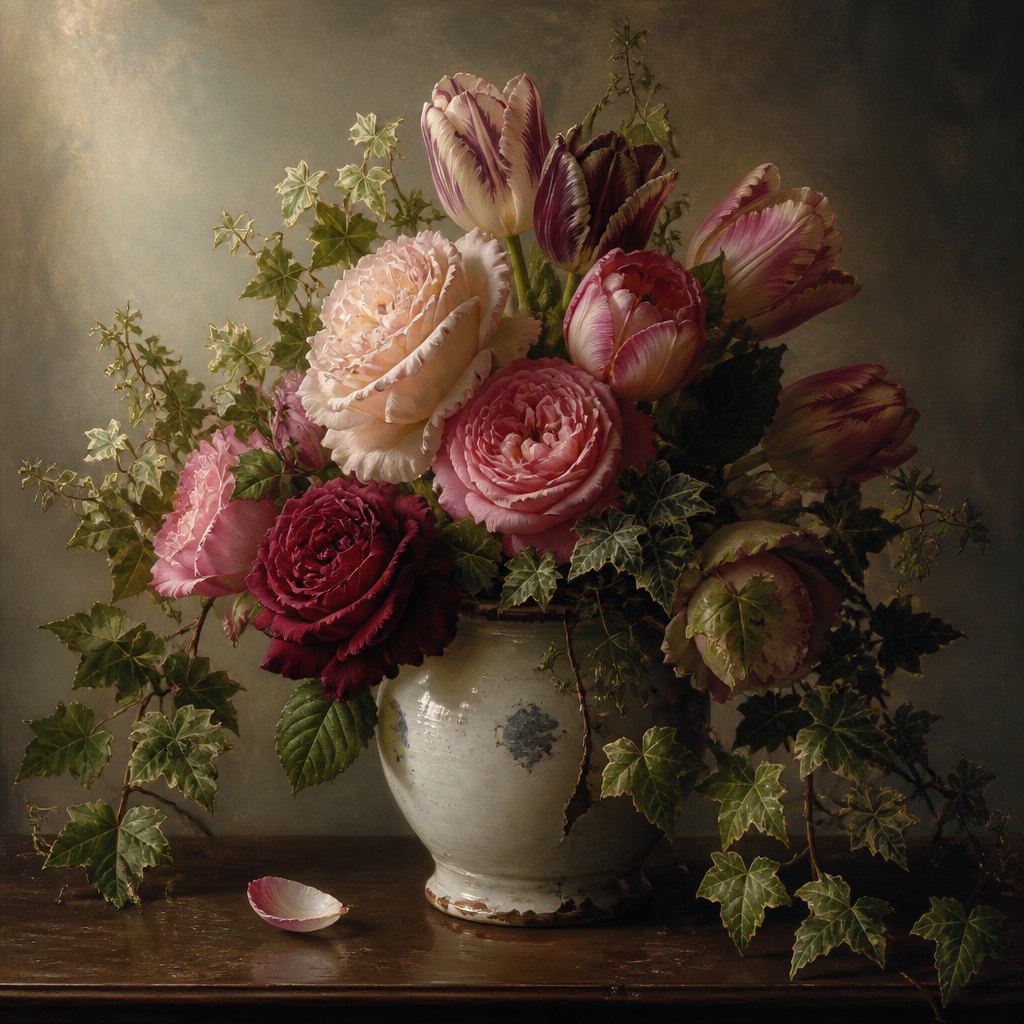 AI-generated
Paint your own
Hang your own flower painting in the salon
This example was generated from a prompt like: “An imagined bouquet of full-blown roses, tulips, and trailing ivy spilling from a chipped ceramic vase, one petal fallen on a dark wooden table, a small beetle resting on a lower leaf, softly lit from the left.”
Open the Flower Painting Art Style generator →The genre today
Flower painting's decorative and symbolic vocabulary now lives in botanical illustration, greeting cards, textile and wallpaper design, and the endless still-life photography of the cut-flower industry. AI image generators handle floral prompts extremely well, often defaulting to lush, impossible bouquets much like Dutch specialists once painted. Contemporary painters keep returning to flowers too, sometimes leaning into hyperrealism and sometimes pushing toward abstraction, using the same tension between fragile beauty and inevitable decay that has driven the genre since its beginning.
Compose your own
Start with a loose, asymmetrical arrangement in a simple vase, letting a few stems spill past the rim rather than arranging everything symmetrically. Mix blooms freely regardless of season — the genre never required botanical realism about timing, only about individual petal and leaf structure. Set the arrangement against a plain, dark background so color and detail read clearly. Add one small imperfection, like a curling leaf or a dropped petal, to keep the bouquet from feeling static or artificial. Light it from one side to model the volume of individual petals rather than flattening them. Consider adding a small insect on a leaf or petal for scale and a quiet hint of the arrangement's impermanence. Render texture carefully — waxy petals, fuzzy stems, glossy leaves each catch light differently.
Frequently asked questions
What is a flower painting?
A flower painting is a work devoted to blossoms, bouquets, or gardens as its central subject, ranging from precise botanical studies to decorative still-life arrangements.
Why do flower paintings mix blooms from different seasons?
Painters prioritized visual variety and symbolic range over botanical accuracy, freely combining flowers from different months into a single impossible bouquet that no real garden could produce at once.
Why do insects appear in flower paintings?
A fly, beetle, or butterfly adds naturalistic detail while also hinting that decay has already begun on the cut flowers, giving even a beautiful bouquet an undercurrent of mortality.
Is flower painting the same as botanical illustration?
They overlap but differ in purpose: botanical illustration prioritizes scientific accuracy for identification, while flower painting prioritizes composition, symbolism, and painterly beauty, even at the expense of strict accuracy.