 Art
Art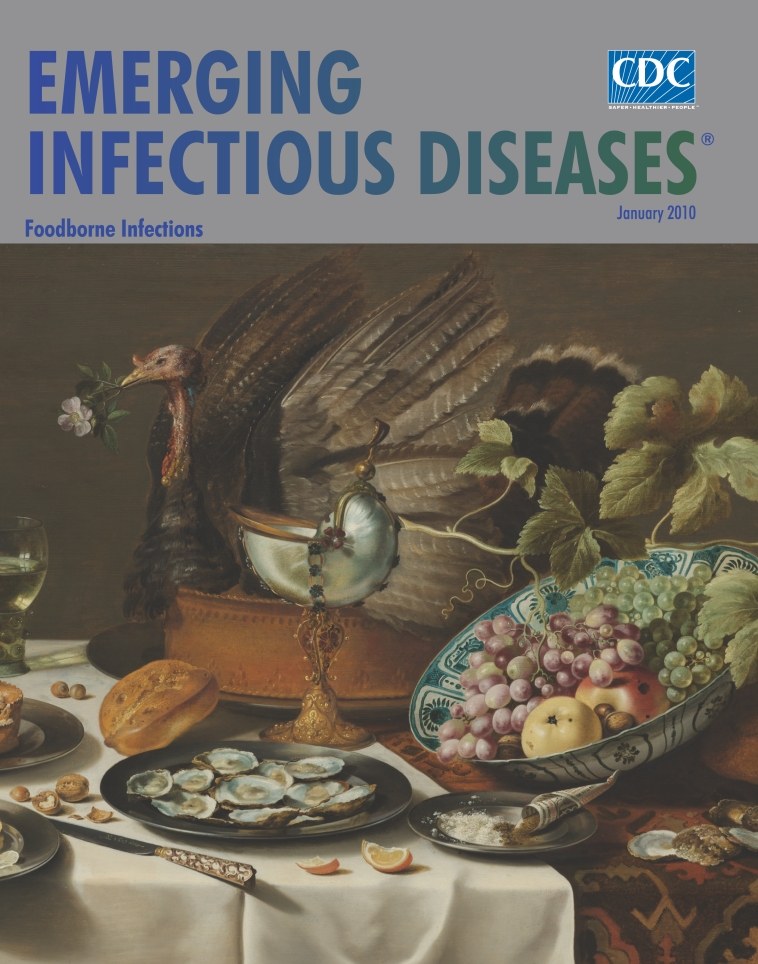
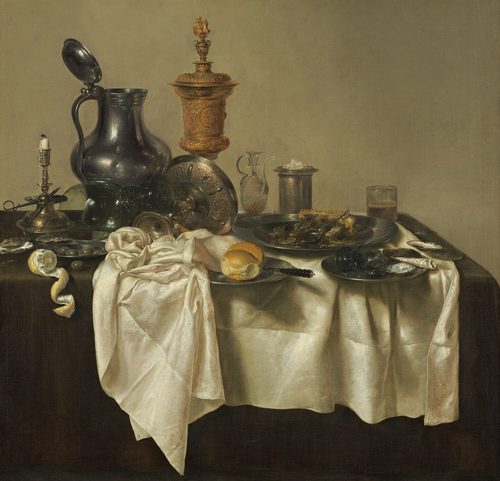
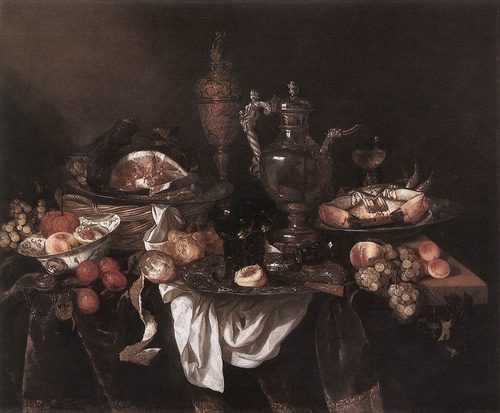
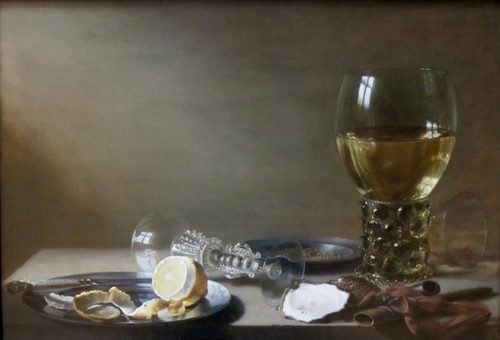
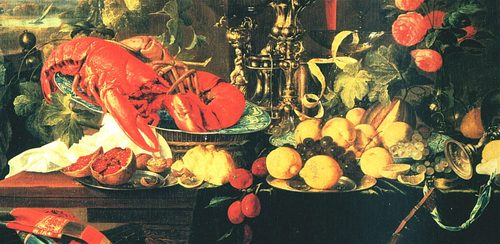
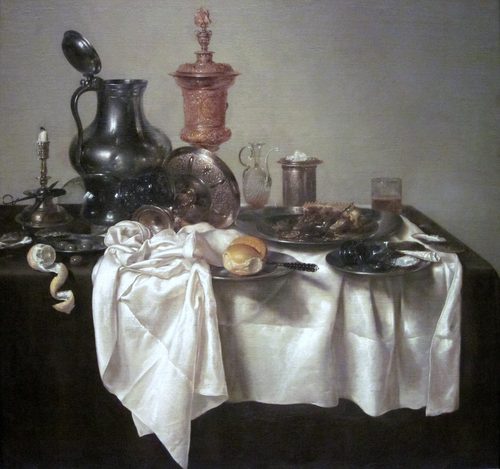
Food in art is any picture that makes eating, cooking, or the raw ingredients themselves the main event rather than a backdrop detail. It spans humble kitchen scenes to lavish banquet still lifes stacked with lobster, citrus, and silver, and it has always done double duty: celebrating the sensory pleasure of a good meal while quietly moralizing about excess, mortality, or thrift. Dutch and Flemish painters of the seventeenth century turned grocery displays into genre paintings that flattered wealthy merchant patrons who wanted their prosperity mirrored back in glossy paint. Spanish bodegón painters stripped the same subject down to a handful of vegetables lit like relics. Because food spoils, decays, and gets eaten, painting it also became shorthand for time passing—ripe fruit tips into rot within the same canvas. Today the genre covers everything from religious feast scenes to Pop Art soup cans, always asking what a culture's plate says about its values.
The rules of the genre
Groaning Table Layout
The table fills most of the canvas edge to edge, laden with more food than anyone could eat—game birds, fruit pyramids, cheese wheels, and wine all crowded together. The excess is the point: it signals a host's wealth and generosity while giving the painter maximum textures and colors to render.
Ripeness as Clock
Fruit appears at its peak or just past it—a split fig, a bruised peach, a fly landing on a plum. This isn't carelessness; overripeness reminds the viewer that the meal, like the body, is already beginning to decay the moment it looks its best.
Imported Luxury Goods
Lemons, oranges, and porcelain bowls signal trade routes and disposable income—citrus had to travel far and stayed expensive, so a lemon peel curling off the table edge announces the owner's reach into foreign markets, not just their pantry.
Raking Side Light
A single strong light source rakes across the spread from one side, catching the glisten of grapes, the fuzz on a peach, and the sheen of pewter or silver. The dramatic shadow it throws turns groceries into a still theater of texture.
Flies and Blemishes
A fly perched on the rim of a glass, a worm hole in an apple, or a curling cheese rind are deliberate flaws—tiny memento-mori details planted in an otherwise sumptuous scene to remind the viewer that every feast is temporary.
Background Kitchen Labor
Behind the laden table, a cook, servant, or market vendor often works in shadow or a side room, a quiet reminder that abundance takes hands to produce. Their presence adds a second, humbler story running underneath the display of plenty.
Symbol decoder
How to read a food in art
- Curled lemon peel
- → Shows off the painter's technical skill and the fruit's status as an expensive import.
- Fly on food
- → A memento-mori detail—decay has already begun inside the scene of abundance.
- Overturned glass
- → A spilled drink or toppled vessel suggests a feast cut short, or life's fragility.
- Hanging game birds
- → Signals hunting rights and rural estate ownership—an aristocratic privilege made visible.
- Oysters
- → Read as luxury food and, in some traditions, a coded note of sensory indulgence.
- Bread and salt
- → Humble staples standing for hospitality, thrift, or, in religious scenes, communion.
The story
Food appears in art as early as Roman wall paintings and mosaics of scattered scraps meant to look accidentally dropped, but food as a serious independent subject took shape in the Netherlands and Flanders during the seventeenth century. As newly wealthy merchant classes wanted paintings that reflected their prosperity, market scenes, breakfast pieces, and lavish banquet still lifes became a booming specialty, with painters competing to render the glisten of grapes or the frost on a wine glass. Spain developed a parallel, sparer tradition called bodegón, arranging a few vegetables against dark backgrounds with near-religious gravity. The Academy ranked still life, including food painting, near the bottom of its hierarchy below history and portraiture, seen as mere craft rather than intellectual invention. That ranking didn't stop demand: food subjects sold briskly to merchants and remain a steady genre from Dutch banquet scenes through Pop Art's canned goods.
Masterpieces of the genre
| Work | Artist | Date | Why it matters |
|---|---|---|---|
| Basket of Fruit | Caravaggio | c. 1599 | An early independent still life treating fruit as a subject worthy of its own canvas, blemishes and all. |
| Vertumnus | Giuseppe Arcimboldo | c. 1591 | A portrait built entirely from fruits and vegetables, food as material and subject at once. |
| The Ray | Jean-Siméon Chardin | 1728 | A gutted fish hung in a kitchen, giving humble ingredients the gravity of grand-manner painting. |
| The Basket of Apples | Paul Cézanne | c. 1893 | Apples treated as structural volumes, bridging still-life tradition and modernism. |
| Campbell's Soup Cans | Andy Warhol | 1962 | Mass-produced grocery items repeated as Pop Art icons. |
| Cakes | Wayne Thiebaud | 1963 | Thickly painted bakery cases turning dessert display into abstraction of color and impasto. |
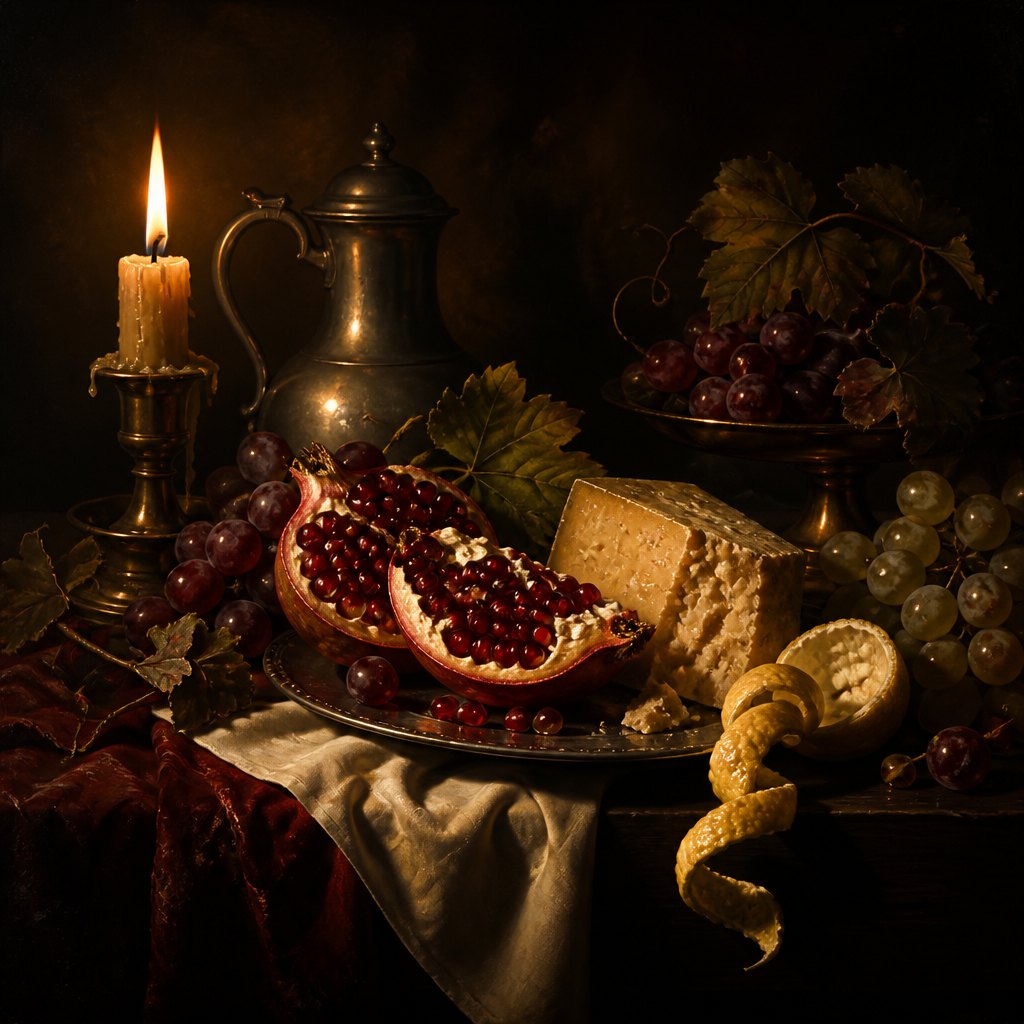 AI-generated
Paint your own
Hang your own food in art in the salon
This example was generated from a prompt like: “A candlelit still life of a laid banquet table: a cracked pomegranate, a wedge of aged cheese, scattered grapes, a pewter pitcher, and a curling lemon peel, painted in rich, dark tones with dramatic side lighting and glossy highlights.”
Open the Banquet Still Life Art Style generator →The genre today
Food photography inherited nearly every convention of the genre—the raking side light, the careful prop styling, the emphasis on glisten and steam. Film and advertising use the same tricks to make a burger or a wedding cake look irresistible on screen. AI image generators are now flooded with food prompts, often defaulting to the same lush, over-styled banquet look painters perfected centuries ago. Contemporary artists still use food to talk about excess, waste, and inequality, proving the genre's old moralizing habit never really went away.
Compose your own
Start with a single strong light source from one side to catch texture—the glisten of grapes, the fuzz on a peach, the sheen of a metal pitcher. Fill most of the frame with the spread itself; let objects crowd toward the edges as if there's too much to fit. Mix textures deliberately: something glossy (fruit, glass), something rough (bread crust, cheese rind), something reflective (silver, pewter). Add one small imperfection—a bruised spot, a curling peel, an insect—to keep the arrangement from feeling sterile. Use a dark, neutral background so the food reads as the only subject. Keep the palette warm and saturated, and let shadows pool low so the composition feels grounded and close, almost within arm's reach.
Frequently asked questions
What is food art in painting?
Food art (or food still life) is any picture built around meals, ingredients, or a laid table as its main subject, from Dutch banquet scenes to Pop Art soup cans. It celebrates the sensory pleasure of eating while often hinting at excess, decay, or the passage of time.
Why does old food art always include flies or blemishes?
Painters planted small flaws—a fly, a worm hole, a wilting leaf—as memento-mori details, reminding viewers that even the richest feast is temporary and that abundance and decay sit right next to each other.
What's the difference between food art and a still life?
Food art is a still life that specifically centers edible subjects—meals, produce, or banquet tables—rather than flowers, books, or musical instruments, though the two categories overlap constantly in gallery labels.
Is food art still made today?
Yes—it lives on in food photography, film prop styling, advertising, and AI-generated imagery, all of which borrow the same dramatic side lighting and crowded, glossy composition that Dutch banquet painters perfected centuries ago.