 Art
Art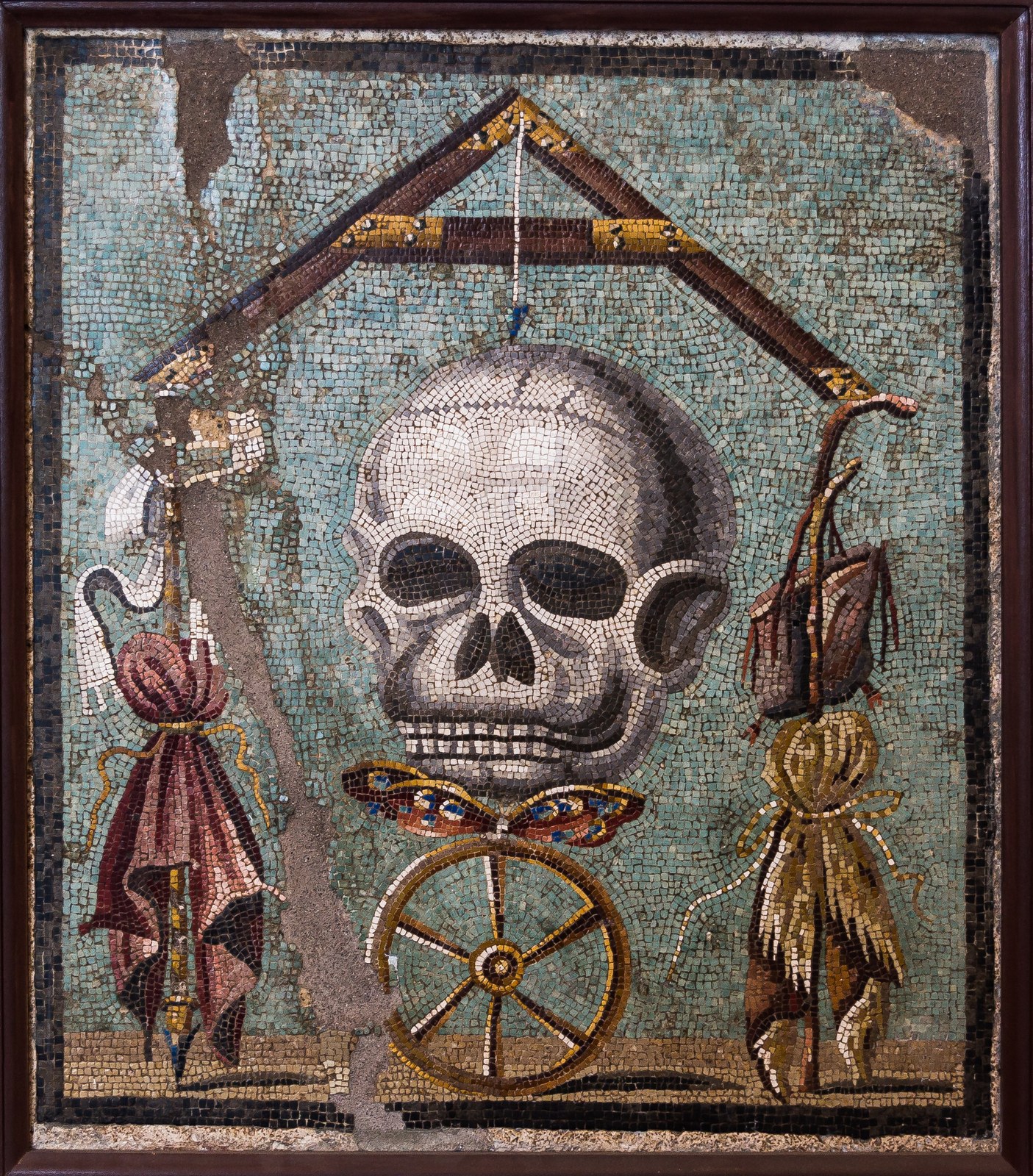
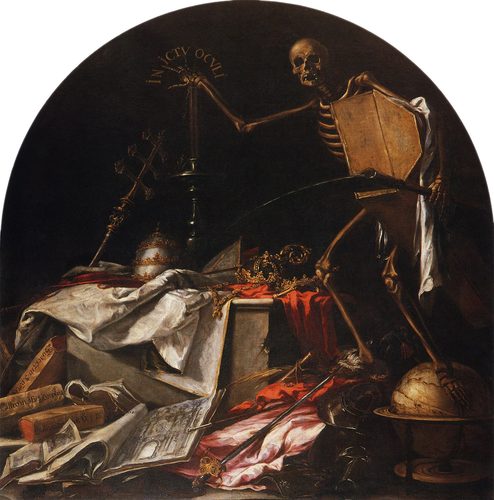
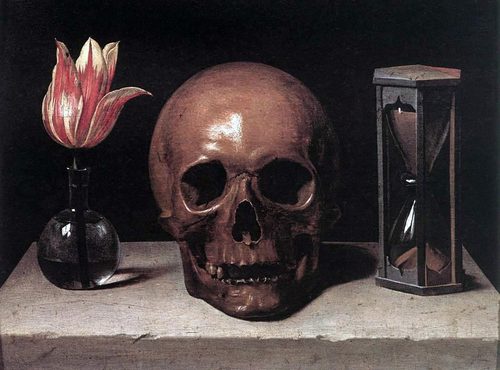
Memento mori — Latin for 'remember you must die' — names any artwork designed to remind its viewer of mortality, a theme far older and broader than the vanitas still life it later helped inspire. The tradition spans ancient Roman floor mosaics showing skeletons at a banquet, medieval tomb sculpture carved with a decaying corpse beneath a noble's effigy, Renaissance portraits holding a skull alongside the sitter, and jewelry cast as tiny skulls meant to be worn and touched daily. Unlike vanitas, memento mori is not tied to a single format or century; it appears in painting, sculpture, architecture, and personal objects alike, wherever a culture wanted to keep death visibly present in ordinary life rather than kept out of sight. The message is consistent across all these forms: earthly rank, beauty, and achievement will end, so live and act accordingly. Where vanitas argues through a curated tabletop of symbolic objects, memento mori is the underlying idea those objects, and countless other artworks, exist to deliver.
The rules of the genre
Skull Held or Displayed
A skull placed in a sitter's hand, resting on a desk, or carved into a tomb is the tradition's most direct device, inserted into an otherwise ordinary portrait or monument to interrupt it with a reminder of death.
Decaying Figure Beneath the Living
Tomb sculpture often carves a rotting or skeletal corpse directly beneath the polished, dignified effigy of the deceased above, forcing viewers to see status and decay stacked in the same monument.
Latin Inscriptions
Phrases like 'memento mori' or 'today me, tomorrow you' are carved or painted directly into the work, spelling out in words what the imagery already implies about mortality and time.
Skeleton as Active Figure
Rather than a passive prop, the skeleton sometimes appears animated — dancing, playing music, or leading figures of every rank away in a procession — dramatizing death as an event rather than a static symbol.
Miniature, Wearable Formats
Memento mori appears at jewelry scale too — rings, pendants, and pocket watches cast as tiny skulls or coffins — carrying the theme into daily, intimate use rather than confining it to grand public art.
Universal Rank Leveled
Popes, kings, and paupers are shown side by side being led away by death, a recurring device that insists mortality erases the social hierarchy so carefully maintained everywhere else in art.
Symbol decoder
How to read a memento mori
- Skull
- → The tradition's core emblem, inserted into portraits, tombs, and objects as a direct, unmistakable reminder of death.
- Skeleton in Motion
- → Death personified as an active figure, often dancing or leading the living away, dramatizing mortality rather than simply symbolizing it.
- Hourglass
- → Time actively running out, a countdown rather than a static warning.
- Winged Skull
- → Common on tombstones, combining mortality with the swift, inescapable flight of time.
- Extinguished Torch
- → A classical symbol carried into later memento mori art, standing for a life put out.
- Latin Inscription
- → Spells out the theme directly in words, ensuring the message survives even if the imagery is misread.
The story
Memento mori predates any single artistic genre, with roots in ancient Roman customs — a triumphant general was reportedly reminded of his mortality even at the height of celebration — and Roman mosaics placed skeletons at banquets to sharpen the pleasure of the feast. Medieval Europe amplified the theme through the trauma of plague years, when the danse macabre, or dance of death, became a popular image showing death leading figures of every rank in a single procession. Tomb sculpture of the period sometimes paired a noble's dignified effigy with a carved, decaying corpse beneath it, a form known as the transi tomb. The Renaissance folded memento mori into portraiture, tucking a skull into a sitter's hand or a still life, and it later fed directly into the seventeenth-century vanitas still life as one specialized expression of the same idea. Because it cut across painting, sculpture, and object-making rather than sitting in one hierarchy, memento mori was never ranked as a single genre — it was a theme any format could carry.
Masterpieces of the genre
| Work | Artist | Date | Why it matters |
|---|---|---|---|
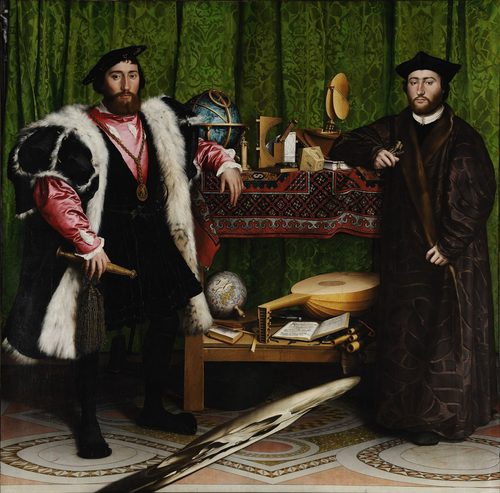
| The Ambassadors | Hans Holbein the Younger | 1533 | Two wealthy diplomats stand amid instruments of learning and power, with a distorted, anamorphic skull stretched across the foreground floor. |
| The Triumph of Death | Pieter Bruegel the Elder | c. 1562 | An army of skeletons overruns a landscape of the living, one of the most sweeping memento mori scenes ever painted. |
| Self-Portrait with Death Playing the Fiddle | Arnold Böcklin | 1872 | The painter shows himself pausing at his easel as a skeleton fiddles just behind him. |
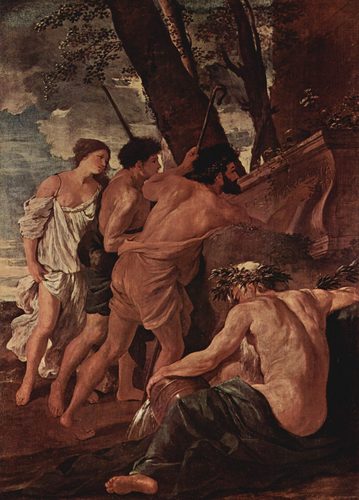
| Et in Arcadia Ego | Nicolas Poussin | 1637-1638 | Shepherds in an idyllic landscape discover a tomb inscribed with the phrase, realizing death reaches even paradise. |
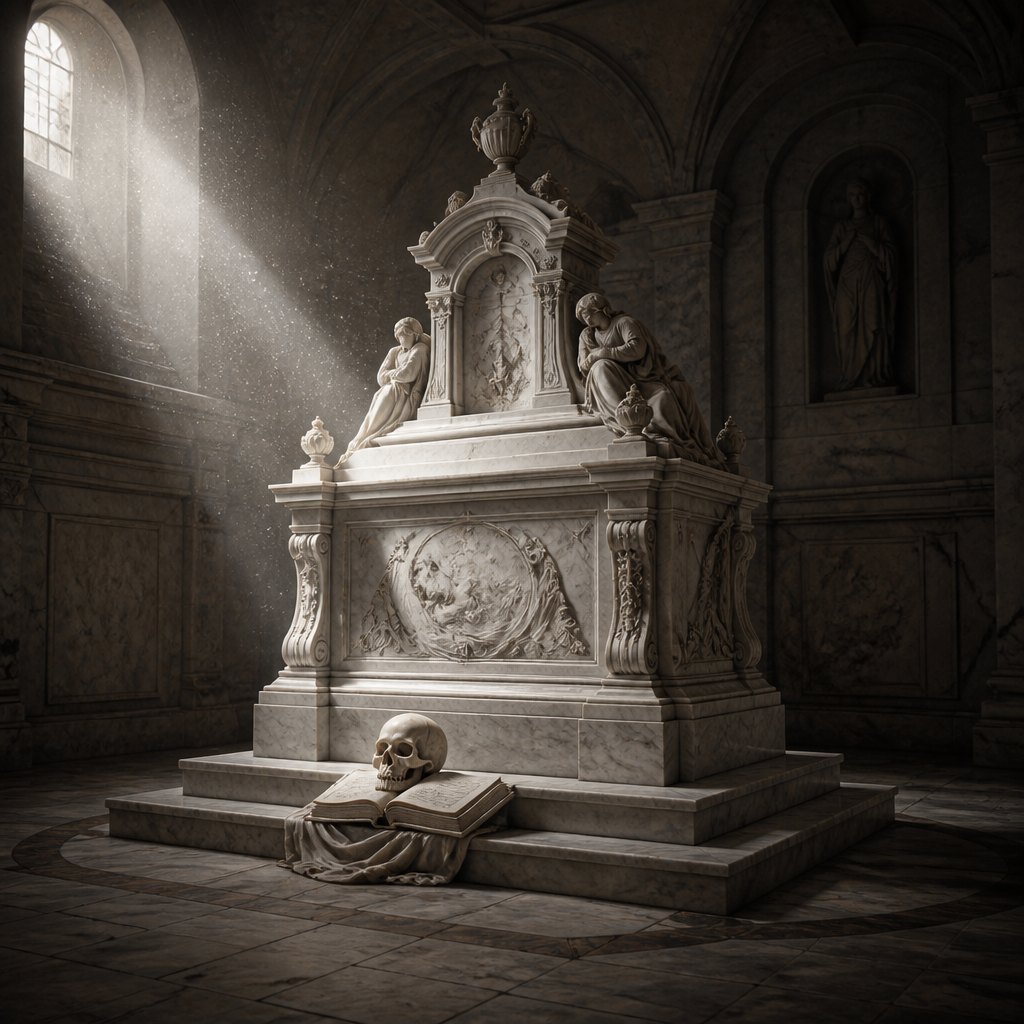 AI-generated
Paint your own
Hang your own memento mori in the salon
This example was generated from a prompt like: “An imagined marble tomb monument inside an empty chapel, a carved skull resting on an open stone book at its base, a single shaft of light from a high window, dust drifting in the still air.”
Open the Memento Mori Art Style generator →The genre today
Memento mori imagery now circulates far outside fine art — skull motifs on fashion, tattoos, album covers, and film all draw on the same core reminder, usually stripped of its original moral instruction and worn as pure aesthetic. AI image generators produce memento mori imagery easily, since skulls and skeletal figures are instantly legible symbols. Contemporary artists still use the tradition seriously too, restaging its skulls and decay motifs to comment on consumer culture and the body in ways that update the message for a secular audience.
Compose your own
Choose a format first — portrait, tabletop object, or figure in a landscape — since memento mori works across all of them rather than needing a still-life setup. Insert one unmistakable death symbol: a skull, skeleton, or extinguished flame, placed where it interrupts an otherwise ordinary scene rather than blending into it. If working with a figure, consider pairing a living, dignified pose with a visible sign of mortality nearby, letting the contrast do the work. A short inscribed phrase can reinforce the image without over-explaining it. Keep the rest of the composition restrained so the death symbol reads clearly and immediately. The goal is interruption, not decoration — the memento mori element should always feel like it is breaking into the scene from outside its comfort.
Frequently asked questions
What does 'memento mori' mean?
Memento mori is Latin for 'remember you must die.' It describes any artwork or object designed to remind its viewer of mortality, regardless of format or era.
What is the difference between memento mori and vanitas?
Memento mori is the broad theme of remembering death, found in portraits, sculpture, and jewelry across history. Vanitas is a specific seventeenth-century still-life genre that expresses that same theme through a defined set of symbolic objects.
What is a danse macabre?
The danse macabre, or dance of death, is a memento mori image showing a skeletal figure leading people of every social rank — pope, king, peasant — away in a single procession, popular after Europe's plague years.
What is a transi tomb?
A transi tomb pairs a noble's dignified effigy with a carved, decaying corpse beneath it, forcing viewers to see status and physical decay represented in the same monument.