 Art
Art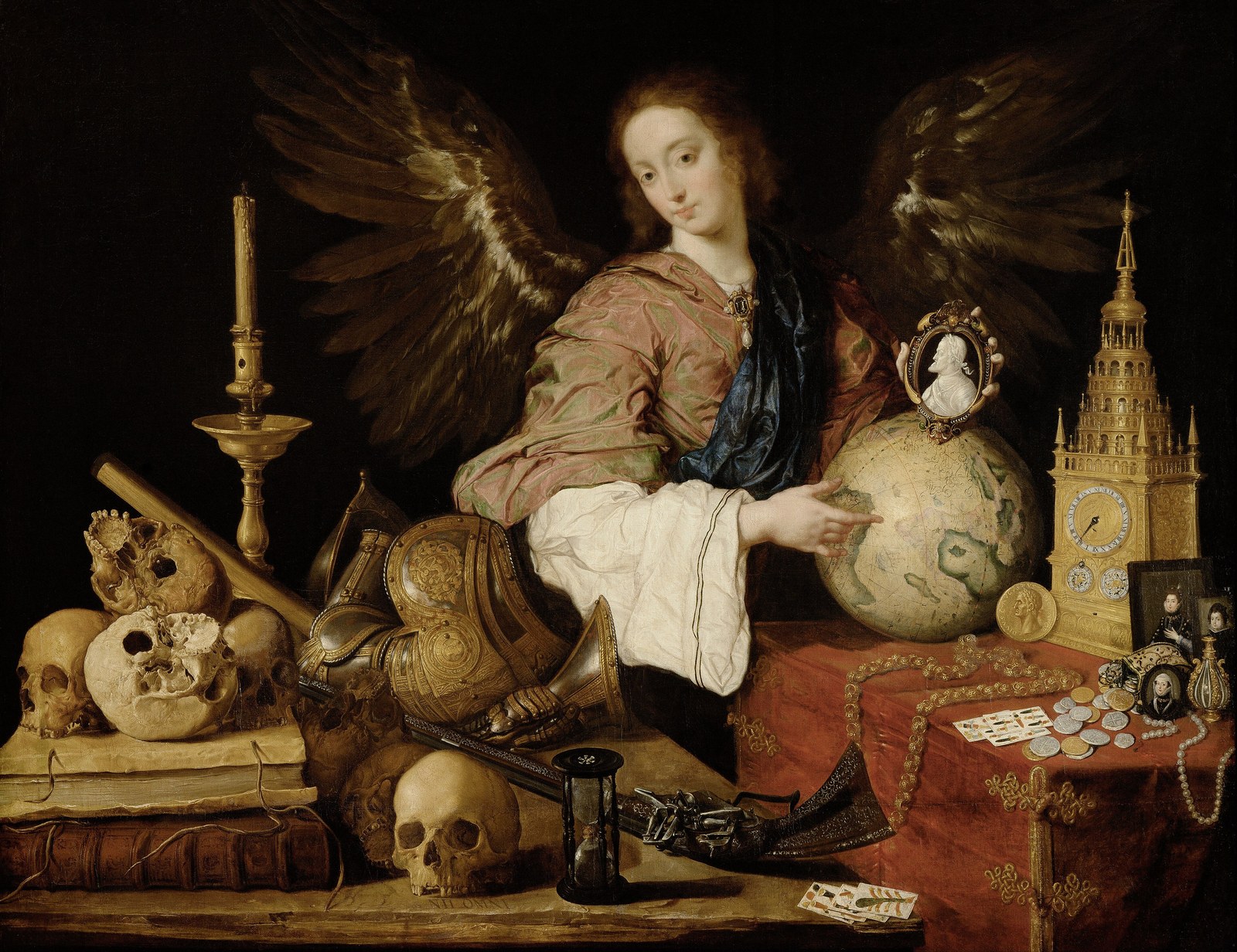
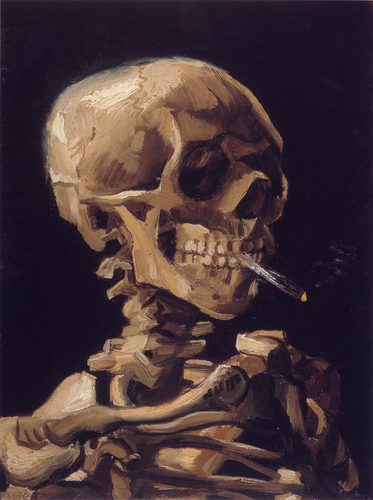
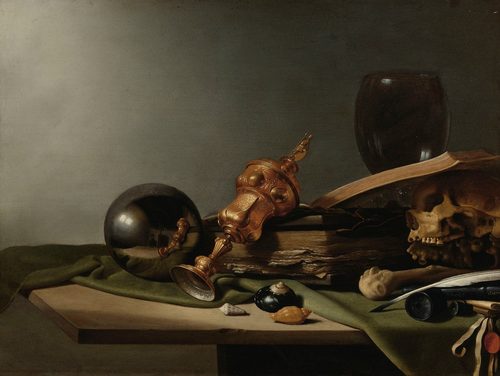
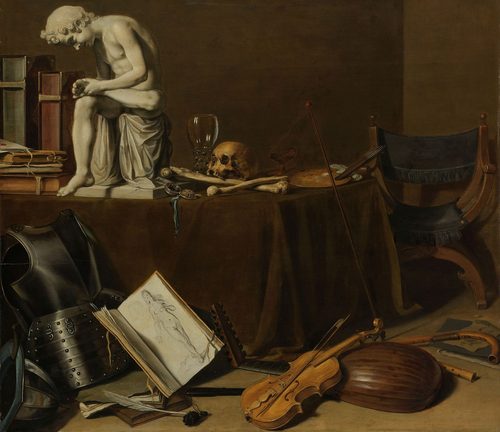
A vanitas is a still-life painting assembled from objects that symbolize the transience of earthly life and the certainty of death — a skull, a snuffed or guttering candle, an hourglass, wilting flowers, and often the trappings of wealth, learning, or pleasure such as coins, books, or musical instruments. The genre takes its name from the Latin phrase 'vanitas vanitatum,' vanity of vanities, from Ecclesiastes, and flourished in the seventeenth-century Dutch Republic among a newly prosperous merchant class eager to display wealth while also performing piety about its ultimate worthlessness. Every object in a vanitas is chosen for its double meaning: a peeled lemon looks luxurious but tastes bitter, a soap bubble is beautiful and instantly gone, a half-empty glass suggests pleasure already spent. The genre gave painters license to render luxury goods in loving, seductive detail while the picture's overall message scolded the viewer for wanting exactly that. A vanitas rewards close reading — every prop is doing symbolic work, nothing is purely decorative.
The rules of the genre
The Skull as Anchor
A human skull, often placed centrally or near the front of the arrangement, is the genre's most direct and recurring symbol, standing in for the inevitability of death that every other object in the painting elaborates on.
Extinguished or Guttering Flame
A candle just blown out, still trailing smoke, or burned down to its final inch marks time passing and life ending, its smoke often the only movement suggested in an otherwise frozen arrangement.
Luxury Goods on Display
Coins, jewelry, fine textiles, and imported goods appear in loving, expensive detail, letting the painter flaunt technical skill and the patron's wealth even as the picture argues those very objects are worthless.
Fragile, Perishable Objects
Soap bubbles, wilting flowers, overripe fruit, and peeling paint stand in for beauty's short shelf life, chosen because their decay is already visible or imminent within the frame, caught at the very edge of ruin.
Cluttered Tabletop Arrangement
Objects are piled or arranged close together on a dark tabletop, often teetering near the picture's edge, creating a sense of imminent disorder that mirrors the instability the painting is describing.
Dark, Neutral Background
A plain, shadowy backdrop keeps every object legible and gives the arrangement a stage-like isolation, focusing attention entirely on the symbolic objects rather than any setting, landscape, or narrative detail around them.
Symbol decoder
How to read a vanitas
- Skull
- → Mortality itself — the genre's central and most direct memento of death.
- Hourglass or Clock
- → Time running out, measuring the exact, unstoppable pace of life's end.
- Snuffed Candle
- → A life just extinguished, its rising smoke standing for the soul's departure.
- Soap Bubble
- → Beauty and life's fragility, gone in the same instant it forms.
- Wilting Flowers
- → Beauty's brief bloom, chosen at the exact moment of decline rather than full flower.
- Books and Scholarly Instruments
- → The futility of accumulated knowledge in the face of death, however impressive it looks while alive.
- Coins or Jewelry
- → Wealth's ultimate uselessness, displayed in tempting detail specifically to be renounced.
- Overripe Fruit
- → Ripeness tipping into rot, a fast preview of decay applied to something ordinarily desirable.
The story
Vanitas painting emerged in the early seventeenth-century Dutch Republic, most fully in Leiden, where a strong Calvinist culture prized moral instruction even in art bought by an increasingly wealthy merchant class. The genre drew directly on Ecclesiastes' warning that all earthly striving is vanity, giving painters religious cover to depict luxury objects that a stricter reading of the same theology might condemn. As pure still life, vanitas sat low in the academic hierarchy, ranked well below history painting, yet its technical demands — rendering glass, metal, fabric, and bone convincingly — made it a genuine showcase of skill, and specialists built lasting reputations on it. The genre spread from Leiden to other Dutch cities and briefly to Spain and France, each region inflecting the formula slightly, before tastes shifted toward livelier genre scenes and landscapes later in the century. Vanitas never fully disappeared, resurfacing whenever artists wanted a shorthand for mortality inside an otherwise ordinary object.
Masterpieces of the genre
| Work | Artist | Date | Why it matters |
|---|---|---|---|
| Vanitas Still Life | Harmen Steenwijck | c. 1640 | One of the most reproduced vanitas compositions, arranging a skull, extinguished lamp, and Japanese sword beside a shell and books. |
| Still Life with a Skull and a Writing Quill | Pieter Claesz | 1628 | A tipped-over skull and quill in a dim, near-monochrome palette, among the earliest fully realized Dutch vanitas paintings. |
| Vanitas Still Life | Maria van Oosterwijck | 1668 | Combines a skull and hourglass with a lush flower arrangement by one of the few celebrated women still-life painters of the era. |
| In Ictu Oculi | Juan de Valdés Leal | 1672 | A Spanish vanitas showing a skeleton snuffing out a candle over emblems of worldly power, more explicitly morbid than Dutch examples. |
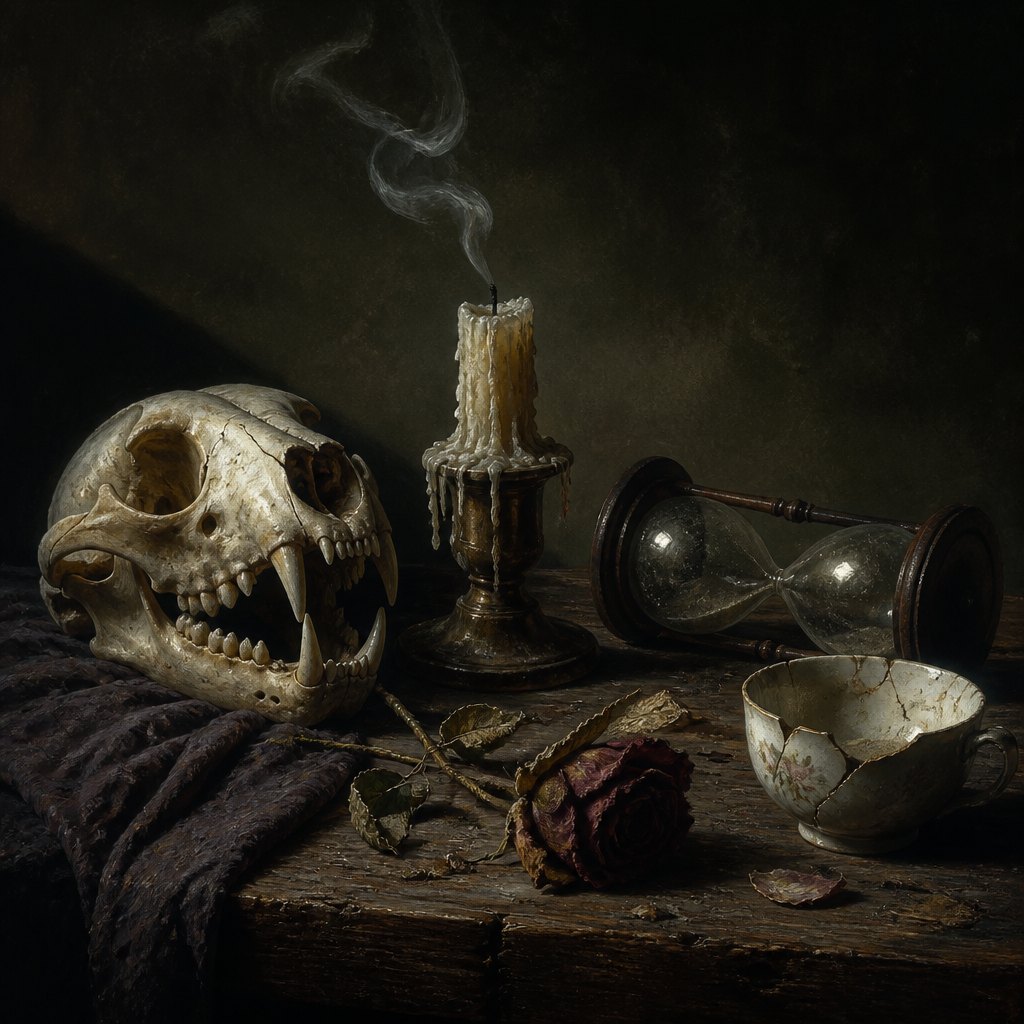 AI-generated
Paint your own
Hang your own vanitas in the salon
This example was generated from a prompt like: “An imagined tabletop still life: a bleached animal skull beside a burned-down candle trailing smoke, an overturned hourglass, a wilting rose, and a cracked porcelain cup, lit dramatically from one side against a dark background.”
Open the Vanitas Still Life Art Style generator →The genre today
Vanitas logic now turns up anywhere a still life carries a memento-mori charge — album covers, editorial photography, and prestige-drama production design all borrow the skull-and-candle formula to signal mortality fast. AI image generators handle 'vanitas still life' prompts well, since the genre is really a checklist of recognizable props. Contemporary painters and photographers keep restaging vanitas with modern objects — phones, plastic, medical equipment — updating the same warning about time and consumption for a very different set of luxuries.
Compose your own
Arrange a small group of objects on a dark, plain tabletop, choosing each one for a double meaning: something beautiful that decays, something valuable that means nothing after death, something that visibly measures time. A skull, candle, or hourglass anchors the message; build the rest of the arrangement around it. Light the scene from one side, casting deep shadows that heighten the mood. Include at least one fragile object — a bubble, a wilting flower, an overripe fruit — shown at the exact moment of decline. Keep the background empty and dark so nothing competes with the objects. Render every surface — glass, metal, petal, bone — with careful, loving detail; the seduction of the objects is what gives the warning its bite.
Frequently asked questions
What is a vanitas painting?
A vanitas is a still life filled with symbolic objects — a skull, candle, hourglass, wilting flowers — that remind the viewer that life, beauty, and wealth are all temporary.
What does 'vanitas' mean?
Vanitas is Latin for emptiness or vanity, drawn from the biblical phrase 'vanity of vanities,' meaning that worldly pursuits ultimately amount to nothing.
What objects always appear in a vanitas?
A skull is the most consistent element. Beyond that, painters chose freely from candles, hourglasses, wilting flowers, soap bubbles, coins, and books that pair visible beauty or value with implied decay.
What's the difference between vanitas and memento mori?
Memento mori is the broader theme of 'remember you must die,' found across many art forms and eras. Vanitas is a specific still-life genre that expresses that theme through a defined set of symbolic objects.