 Art
Art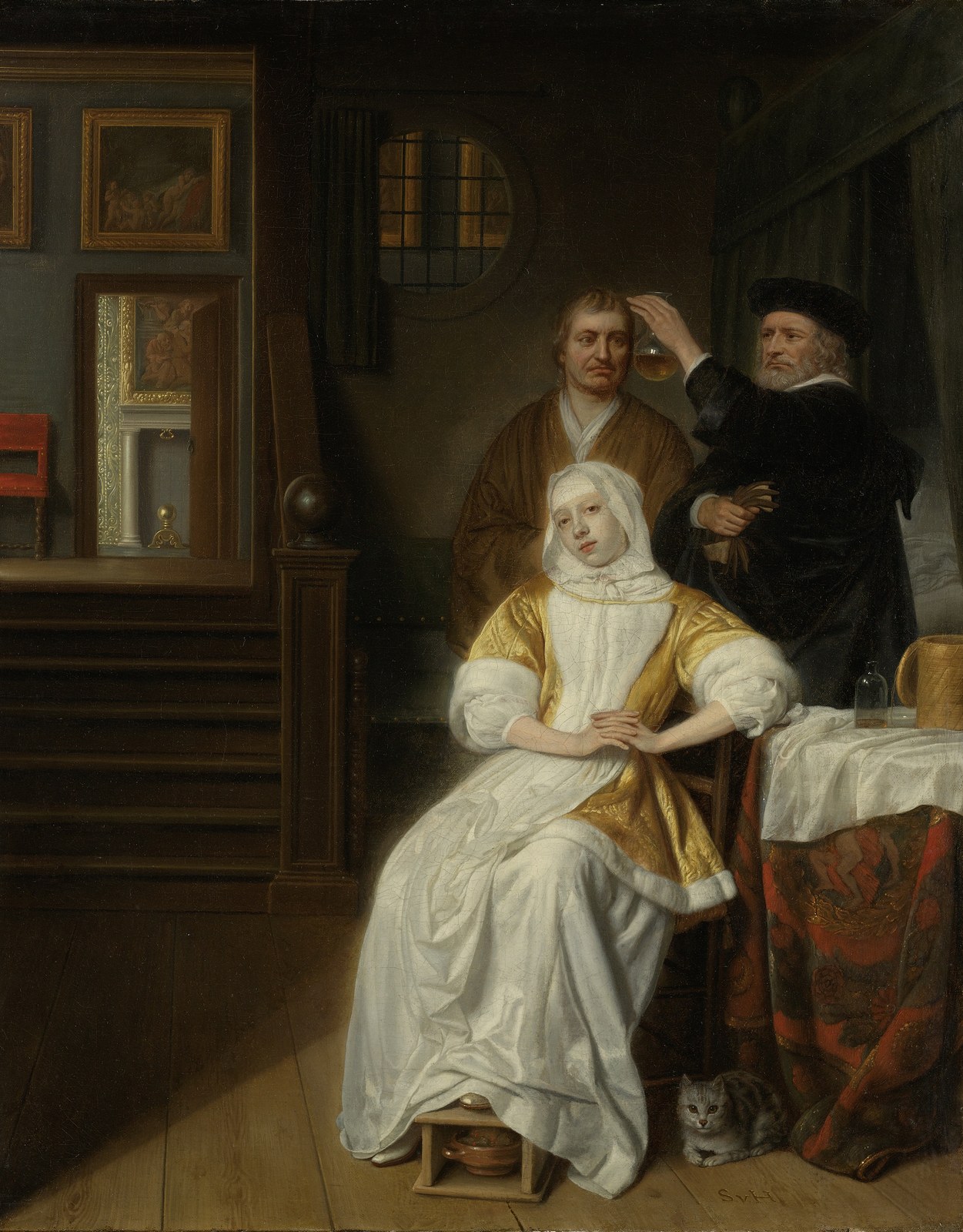
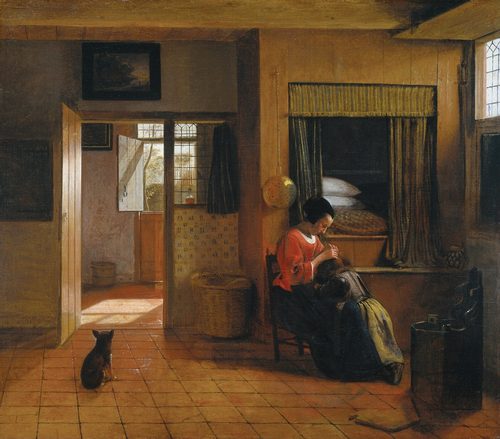
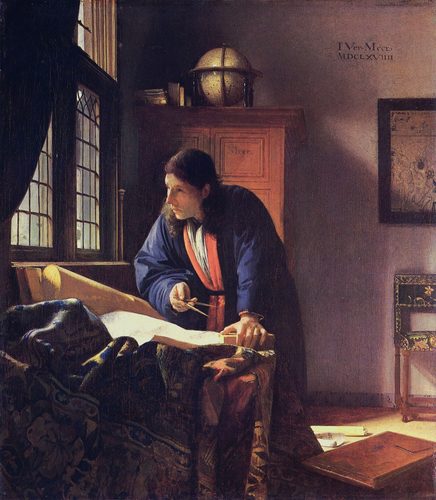
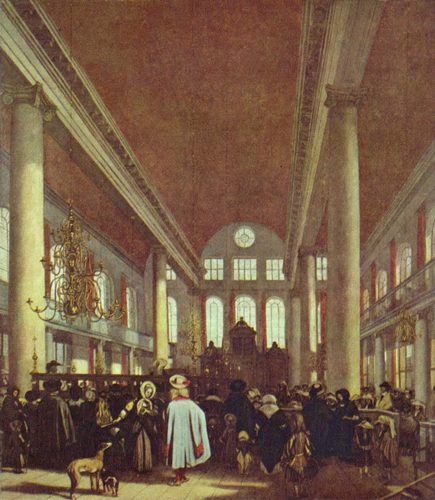
An interior scene is a painting whose primary subject is the inside of a room — a parlor, kitchen, studio, or bedroom — rather than a landscape, portrait sitter, or historical event happening within it. The genre flourished first in seventeenth-century Dutch and Flemish painting, where prosperous merchant households commissioned quiet views of women reading letters, sweeping floors, or pouring milk, each room rendered with meticulous attention to tiled floors, leaded windows, and raking daylight. Interiors let painters study perspective, light, and texture in a controlled setting, while also encoding information about their occupants: a well-appointed room signals wealth and order, a sparse one signals poverty or austerity. Figures may or may not be present, but even empty interiors read as inhabited, full of implied presence in a folded letter, an unmade bed, or a half-finished meal. The genre remains one of painting's most intimate — a way of looking at private life without a story getting in the way.
The rules of the genre
Window Light from One Side
A single window, usually to the left, throws soft, directional daylight across the room, modeling walls, faces, and objects while leaving the rest of the space in gentle shadow — a favorite device for structure and calm.
Implied Narrative Objects
A half-written letter, an empty chair, or a door left ajar suggests a story just out of frame, inviting viewers to imagine what happened moments before or after the scene depicted.
Meticulous Surface Detail
Tiled floors, patterned rugs, brass fixtures, and leaded glass are rendered with near-obsessive precision, since interiors are as much a display of material wealth and painterly skill as a record of daily life.
Figure Absorbed in Task
When present, the room's occupant is usually shown absorbed in a quiet, private activity — reading, sewing, pouring — unaware of the viewer, which lets the painting feel observed rather than posed.
Framed Views Within the Room
Doorways, mirrors, and windows within the interior open onto further rooms or the outside world, layering the composition and hinting that domestic life continues beyond the painted frame, well past the edges of the canvas.
Muted, Domestic Palette
Interior scenes favor warm, restrained colors — ochres, browns, soft blues — echoing the textiles and wood of an actual furnished room rather than the saturated hues of outdoor or history painting.
Symbol decoder
How to read a interior scenes
- Open Letter
- → Suggests romance, news, or a secret just received, often the emotional center of an otherwise quiet domestic scene.
- Broom or Cleaning Tools
- → Signals domestic virtue and order, a visual shorthand for a well-run household.
- Caged Bird
- → A common stand-in for a daughter's protected virtue or, alternately, for constrained domestic life.
- Mirror
- → Extends the room's space and sometimes reveals what the main figure is looking at, adding a second vantage point.
- Empty Chair
- → Implies an absent person, a recent departure, or a place being kept for someone expected to return.
- Map on the Wall
- → In Dutch interiors, signals a household's connection to trade, travel, or a husband away at sea.
The story
Interior scenes rose to prominence in the seventeenth-century Dutch Republic, where a wealthy merchant class wanted paintings of their own domestic world rather than religious or mythological subjects. Painters turned parlors, kitchens, and bedrooms into settings for quiet, often moralizing scenes about virtue, courtship, and household order. Because it depicted ordinary rooms and ordinary people, the genre sat low in the academic hierarchy, well below history painting, though its technical demands of light, perspective, and texture were considerable. Interior painting was revived and reinterpreted across the following centuries: nineteenth-century painters used interiors to explore psychological isolation and modern domestic life, while looser, more atmospheric brushwork was later brought to old subjects like a figure reading by a window. The genre's core appeal never faded — a room is a controlled, intimate stage where light, material, and implied story can be studied without the distraction of an outdoor setting or public event.
Masterpieces of the genre
| Work | Artist | Date | Why it matters |
|---|---|---|---|
| The Milkmaid | Johannes Vermeer | c. 1658-1661 | A servant pours milk in a spare, sunlit kitchen, prized for its rendering of light on wall, bread, and cloth. |
| The Bedroom | Vincent van Gogh | 1888 | The artist's own simplified, tilted bedroom in Arles, using flattened perspective and bold color instead of Dutch precision. |
| A Bar at the Folies-Bergère | Édouard Manet | 1882 | A barmaid stands before a mirror reflecting a crowded interior behind her, complicating a public room with layered, ambiguous space. |
| Arrangement in Grey and Black No. 1 | James McNeill Whistler | 1871 | A spare, muted domestic interior built around a seated figure, commonly known as 'Whistler's Mother.' |
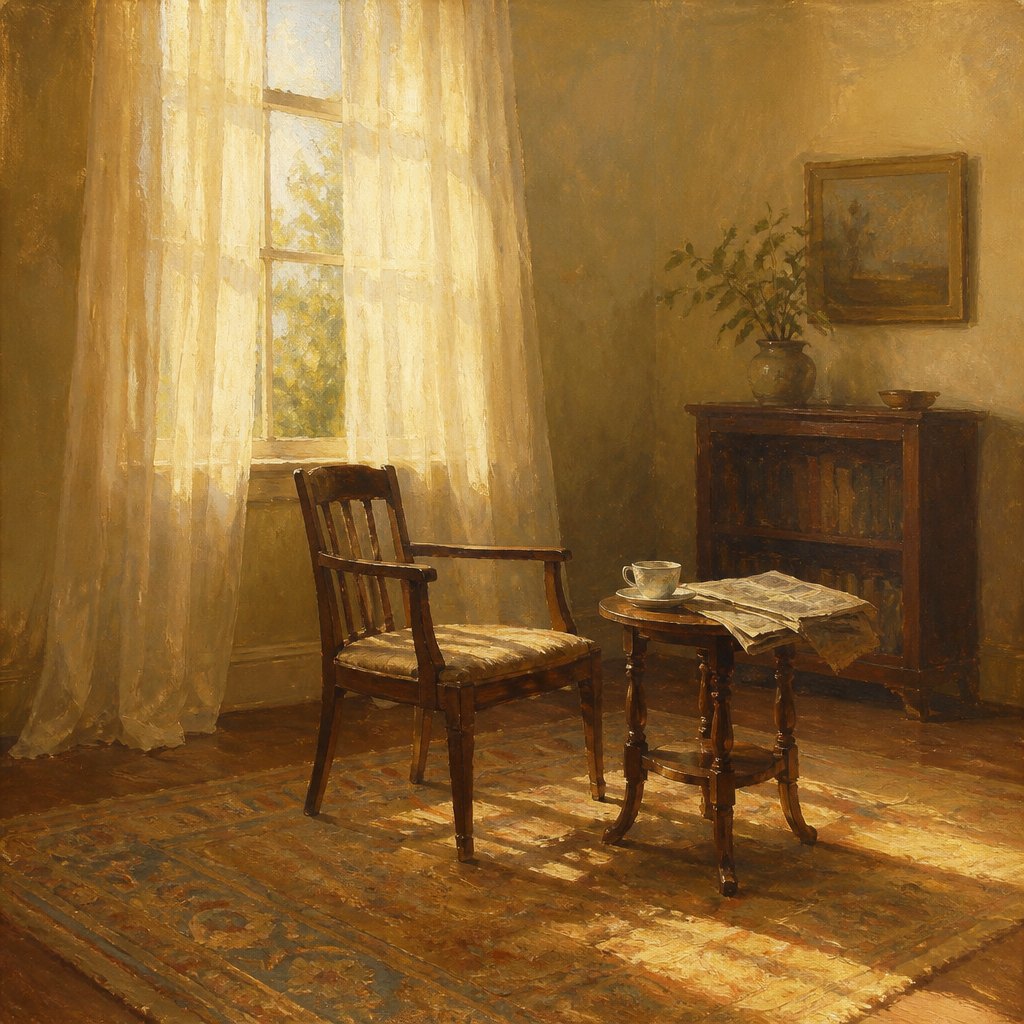 AI-generated
Paint your own
Hang your own interior scenes in the salon
This example was generated from a prompt like: “An imagined sunlit sitting room, one tall window with sheer curtains, a wooden chair beside a small table holding a teacup and folded newspaper, warm afternoon light spread across a worn rug, quiet and still.”
Open the Interior Scene Painting Style generator →The genre today
Interior scenes now surface constantly in film and television set design, where a room's furnishings and light are used exactly as earlier painters used them — to characterize the people who live there before they even speak. Interior design photography and real estate marketing borrow the genre's compositional habits almost directly. AI image generators handle 'cozy interior' or 'sunlit room' prompts easily, and concept artists use interior-scene logic to make video game rooms feel inhabited rather than staged.
Compose your own
Pick one room and commit to a single light source — a window to one side works best for consistent shadow. Populate the space with a few telling objects: a book left open, a coat on a hook, a half-full cup, each implying a person without a face. If you include a figure, keep them absorbed in a quiet task rather than looking at the viewer. Keep the palette warm and restrained, echoing wood and worn paint rather than saturated color. Use a doorway or mirror to open a view into another space, adding depth without leaving the room. Let small imperfections — a rumpled rug, a chipped cup — make the room feel lived in rather than staged.
Frequently asked questions
What is an interior scene in painting?
An interior scene is a painting whose main subject is the inside of a room — its furniture, light, and objects — often with a figure absorbed in a quiet domestic task.
Why did Dutch painters focus so much on interiors?
A prosperous seventeenth-century merchant class wanted art reflecting their own homes and values rather than religious or mythological scenes, and interiors let painters showcase skill with light, texture, and perspective.
Do interior scenes need a person in them?
No — empty interiors are common and can feel just as inhabited, using objects like an open letter or unmade bed to imply a presence that has just stepped out of frame.
What's the difference between an interior scene and a genre scene?
Genre scenes emphasize an activity or narrative moment happening anywhere, while interior scenes emphasize the room itself as subject; the two frequently overlap, since many genre scenes are staged indoors.