 Art
Art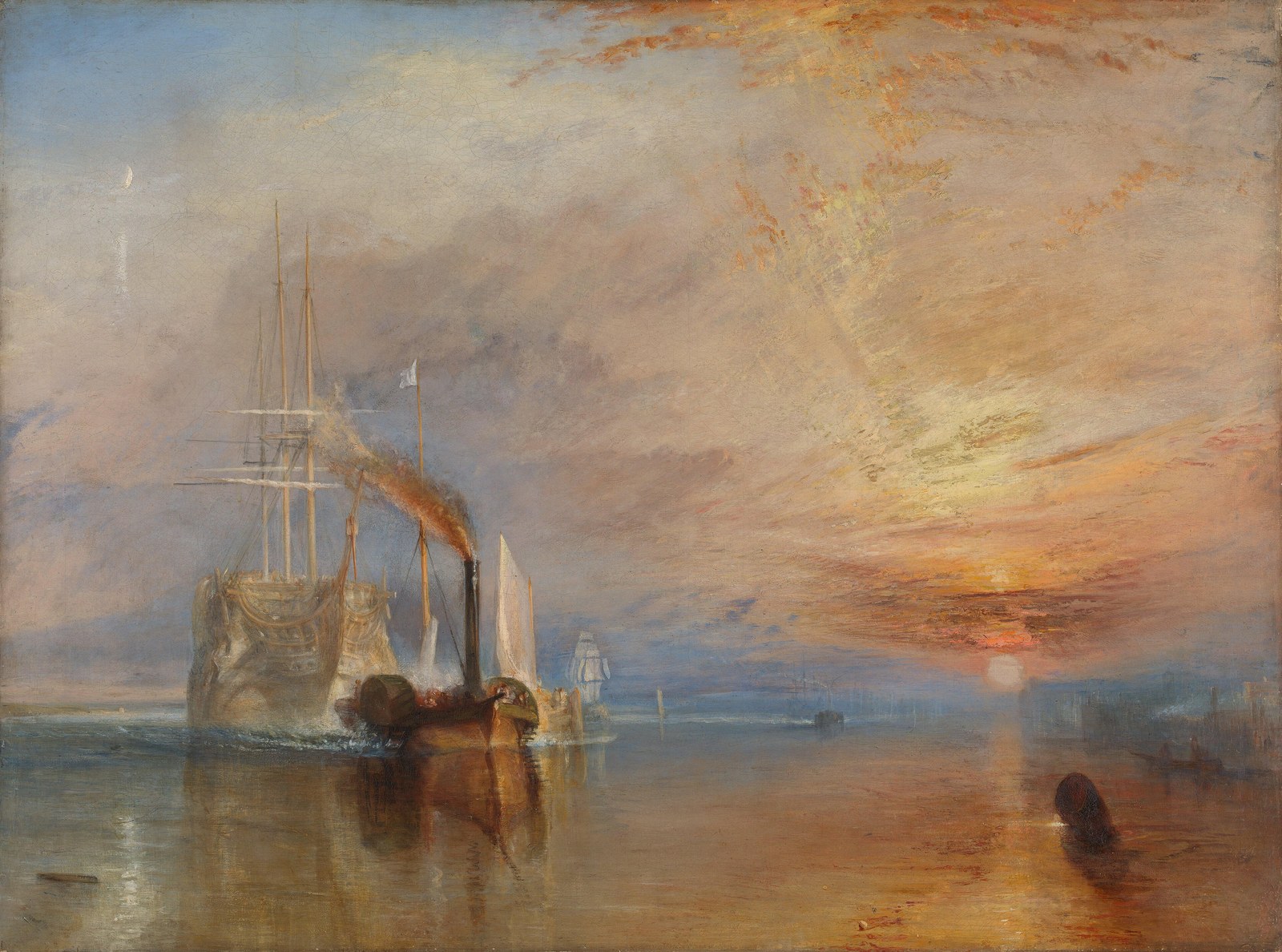
A seascape is a painting whose primary subject is the sea—its water, weather, light, and the vessels or coastline that share the frame with it. The genre grew out of Dutch marine painting in the seventeenth century, when a seafaring, trading nation wanted images celebrating its ships, harbors, and naval victories as much as its portraits and still lifes. Unlike a simple landscape with water in it, a true seascape treats the ocean as the dramatic lead—its color, surface texture, and mood carry the composition, whether calm and glassy or whipped into a storm. Patrons ranged from merchants proud of their fleets to Romantic-era collectors drawn to the sea's sublime, uncontrollable power. Because water never holds still, the seascape became a favorite proving ground for painters interested in capturing light and atmosphere rather than fixed form, a concern that later fed directly into Impressionism's fascination with changing conditions over a single motif painted repeatedly.
The rules of the genre
Low Horizon Line
The horizon sits low in the composition, often below the midpoint, giving sky and clouds room to dominate and set the scene's overall mood before the water is even considered.
Wave Texture
Water surface is rendered with distinctly visible brushwork—choppy, broken dabs for rough seas, long smooth strokes for calm ones—using the paint handling itself to convey motion, weather, and passing mood directly.
Ships as Scale
A vessel, however small, anchors the composition and gives the vast, formless sea a clear sense of scale, distance, and human stakes set against nature's silent, permanent indifference to any single voyage.
Storm Drama
Dark, roiling clouds, whipped foam, and a tilted, unstable horizon signal danger and the sublime power of the open sea, a favorite Romantic subject for showing nature overwhelming any human attempt at control.
Coastal Framing
Rocky outcrops, weathered cliffs, or a harbor edge frame one side of the composition, grounding the boundless, ever-shifting water with a fixed, solid point of visual reference for the viewer.
Reflected Light
Sun or moonlight breaks through parting clouds to strike the water in one bright, unbroken path, drawing the eye steadily across the surface and giving an otherwise flat expanse real depth and drama.
Symbol decoder
How to read a seascape
- Calm water
- → Peace, safe passage, or a lull before a coming storm, depending on the sky above it.
- Storm clouds
- → Danger, the sea's uncontrollable power, or a Romantic vision of nature's sublime indifference to human life.
- Distant sail
- → Hope, a returning voyage, or the vastness of the sea relative to a tiny human vessel.
- Shipwreck debris
- → The sea's danger made explicit, a common Romantic-era subject warning against overconfidence at sea.
- Lighthouse
- → Safety, guidance, and the edge between land and the sea's unpredictable expanse.
- Seabirds
- → Proximity to land, or simply atmosphere and scale within an otherwise empty sky.
The story
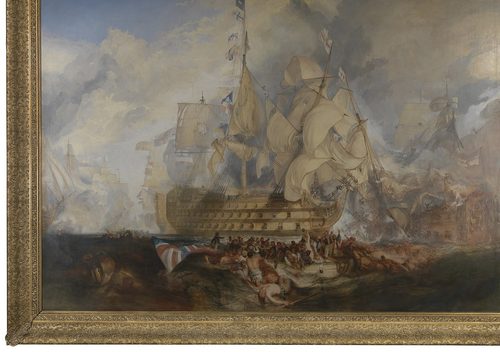
Seascape painting emerged as its own genre in the seventeenth-century Dutch Republic, where a trading and seafaring economy created demand for images of ships, harbors, and naval battles that celebrated national commerce and power. Dutch marine painters developed the genre's core techniques—low horizons, careful cloud observation, exact rigging detail—that spread across Europe over the following century. British painters embraced the seascape enthusiastically in the eighteenth and nineteenth centuries, both for naval pride and, increasingly, for the sea's Romantic appeal as a subject of overwhelming natural power beyond human control. Turner pushed the genre furthest toward atmosphere and abstraction, dissolving ships and coastlines into pure light and weather. Because the sea's surface constantly shifts, the genre attracted painters especially interested in capturing fleeting light and atmospheric effect, an interest that fed directly into Impressionism's coastal studies later in the nineteenth century. The seascape never carried the academic prestige of history painting, but it became one of landscape painting's most commercially popular branches.
Masterpieces of the genre
| Work | Artist | Date | Why it matters |
|---|---|---|---|
| The Great Wave off Kanagawa | Katsushika Hokusai | 1831 | A towering wave curls over distant Mount Fuji, one of art's most reproduced images. |
| The Fighting Temeraire | J.M.W. Turner | 1839 | A veteran warship is towed to be scrapped, lit by a dying golden sunset. |
| A Sea Piece | Willem van de Velde the Younger | c. 1660s | A calm Dutch fleet study exemplifying the golden age of marine painting's precision. |
| The Slave Ship | J.M.W. Turner | 1840 | A storm-lit sea turned into a searing indictment, waves rendered as near-abstract color and light. |
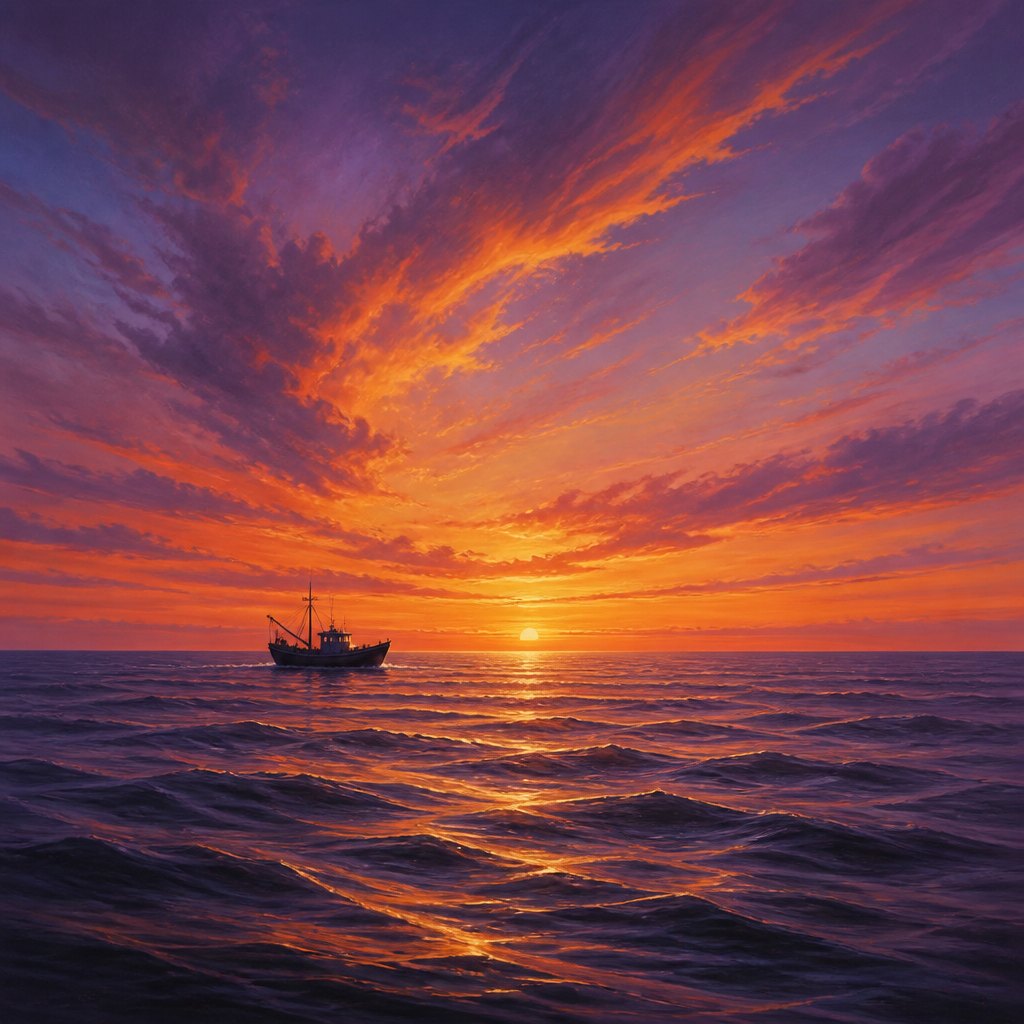 AI-generated
Paint your own
Hang your own seascape in the salon
This example was generated from a prompt like: “An imagined stretch of open ocean at sunset, low horizon, a single small fishing boat silhouetted against streaked orange and violet clouds, gentle waves catching the fading light, calm and atmospheric mood.”
Open the Seascape Painting Style generator →The genre today
Seascape conventions now shape ocean photography, surf and sailing cinematography, and digital art alike—the low horizon, dramatic sky, and single small vessel for scale are still the default recipe for making open water feel meaningful rather than empty. Environmental art has added a newer layer, using the same dramatic sea imagery to comment on rising oceans and coastal loss. AI image generators handle calm and stormy water convincingly, since the genre's core cues—sky, light, and surface texture—are exactly what these models render most fluently.
Compose your own
Set the horizon low, in the bottom third of the frame, so sky and weather dominate the composition and establish mood before the water does. Choose one weather state and commit to it fully—glassy calm with soft reflected light, or a rolling storm with dark clouds and foam—rather than mixing signals. Add a single small vessel or a distant coastline silhouette for scale, positioned off-center. Vary brushwork or texture across the water's surface to suggest motion: long horizontal strokes for calm seas, broken, choppy marks for rough ones. Let a strong light source—a sunset, a break in clouds—strike the water directly, creating one bright focal path across the surface.
Frequently asked questions
What is a seascape painting?
A seascape is a painting with the sea itself as its primary subject—water, weather, light, and often ships or coastline—distinguished from a general landscape by how central the ocean is to the composition.
Where did seascape painting originate?
Seascape emerged as an independent genre in the seventeenth-century Dutch Republic, where a seafaring trading economy created strong demand for paintings celebrating ships, harbors, and naval power.
What's the difference between a seascape and a marine painting?
The terms are largely interchangeable; "marine painting" sometimes leans toward ships and naval subjects specifically, while "seascape" can include the sea and coastline with no vessel present at all.
Why do seascapes often have a low horizon line?
A low horizon gives the sky and clouds room to dominate the composition, since weather and light do much of the emotional work in setting a seascape's mood.