 Art
Art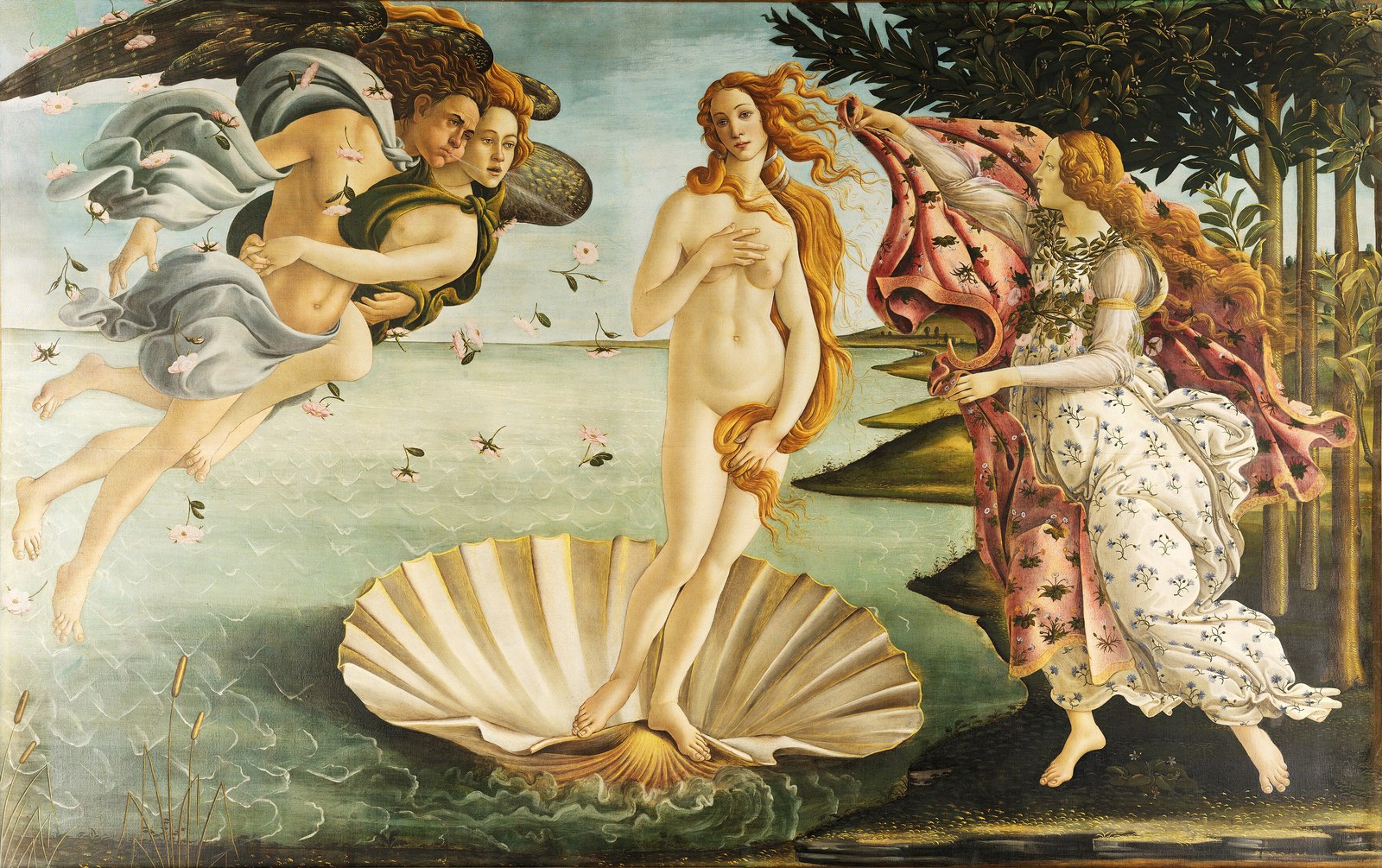
A mythological painting depicts a scene from classical myth—Greek and Roman above all, though Norse and Egyptian stories occasionally surface—cast with gods, heroes, nymphs, and monsters rather than saints or kings. For centuries the genre sat near the top of the academic hierarchy, prized because it let painters show invention, anatomy, and grand composition on one canvas. It also solved a delicate problem: myth gave respectable cover for painting the nude, since Venus rising from the sea or Diana bathing was classical literature, not indecency. Renaissance humanists revived the subject from classical texts, above all Ovid's Metamorphoses, and princely courts commissioned it to display their classical learning and taste. Unlike religious art, mythological scenes carried no doctrinal weight, so painters could linger on beauty, violence, or comedy without answering to a bishop. The genre's appeal was less piety than pleasure—decorative, dramatic, occasionally moralizing, always a chance to show off invention and skill.
The rules of the genre
Gods in Disguise
Deities rarely announce themselves; look for a swan, a shower of gold, or a stranger at the door who is really Jupiter, Apollo, or Mercury testing mortal hospitality or pursuing a lover.
The Chase
A running or fleeing figure, drapery streaming, one step ahead of a god or satyr—Apollo after Daphne, a nymph after nothing at all—captures desire and transformation in a single frozen instant.
Idealized Bodies
Figures are smoothed, proportioned, and lit like marble come to life; myth licensed the classical body as scholarly subject matter, so anatomy reads as learning and beauty rather than indecency.
Animal Attributes
Each god travels with a signature creature or object—Jupiter's eagle, Neptune's trident, Bacchus's leopards, Mercury's winged sandals—so a knowledgeable viewer can identify exactly who is who without reading a single word of accompanying text.
Pastoral Backdrop
Scenes unfold in idealized groves, riverbanks, or Arcadian hillsides dotted with crumbling ruins and grazing goats, framing myth as timeless, placeless nature rather than any specific real historical location or century.
Moment of Transformation
Painters favor the instant of change—flesh becoming bark, a girl becoming a constellation, a man becoming a stag—because it lets one static image narrate a whole story's turning point in a single glance.
Symbol decoder
How to read a mythological art
- Laurel wreath
- → Apollo's tree and poetic triumph; worn by victors, poets, and Apollo himself after Daphne's transformation.
- Owl
- → Athena's companion, signaling wisdom, strategy, and the presence of the goddess even when she's offstage.
- Trident
- → Neptune's weapon and badge of rule over the sea and its storms.
- Thunderbolt
- → Jupiter's signature, marking supreme authority and sudden, world-altering intervention.
- Swan
- → One of Zeus's disguises for seduction; a warning that the animal onscreen may be divine.
- Golden apple
- → The prize of the judgment of Paris, symbol of vanity, rivalry, and the war it eventually triggers.
- Cornucopia
- → Abundance and fertility, often carried by minor deities of harvest and plenty.
- Bow and arrows
- → Cupid's tools of involuntary desire, or Diana's badge of the hunt and chastity.
The story
Mythological painting descends from ancient Greek vase decoration and Roman fresco, but as a distinct European genre it was reborn in the Italian Renaissance, when humanist scholars recovered Ovid's Metamorphoses and other classical texts for princely patrons hungry to display learning. Botticelli, and later Titian, gave the subject its enduring visual language—reclining goddesses, fleeing nymphs, gods caught mid-transformation. Academies counted mythological subjects as a branch of history painting itself, at the top of the hierarchy, since they demanded the same command of anatomy, composition, and multi-figure drama, just applied to pagan rather than sacred or historical subjects. French academic painters carried it into the nineteenth century as cover for polished nudes exhibited at the official Salon. Once photography and modernism made idealized myth-painting look academic in the worst sense, the genre faded from serious painting but never disappeared, resurfacing instead in illustration, film, and fantasy art.
Masterpieces of the genre
| Work | Artist | Date | Why it matters |
|---|---|---|---|
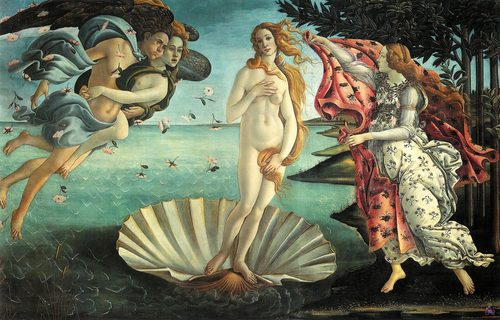
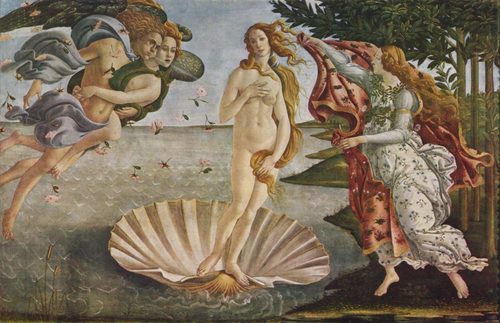
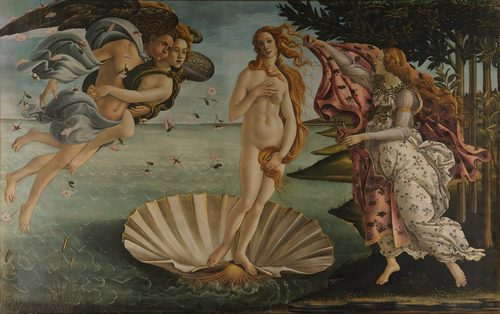
| Birth of Venus | Sandro Botticelli | c. 1485–86 | Venus arrives on a shell, Renaissance myth-painting's founding image. |
| Bacchus and Ariadne | Titian | 1520–23 | Bacchus leaps from his chariot toward the abandoned Ariadne, motion caught mid-air. |
| The Judgment of Paris | Peter Paul Rubens | c. 1632–35 | Three goddesses compete for a golden apple, judged by a shepherd prince. |
| Perseus with the Head of Medusa | Benvenuto Cellini | 1545–54 | A bronze hero holds up his monstrous trophy in the Loggia dei Lanzi. |
| Danaë | Titian | 1544–46 | Zeus arrives as a shower of gold, one of myth's stranger seductions. |
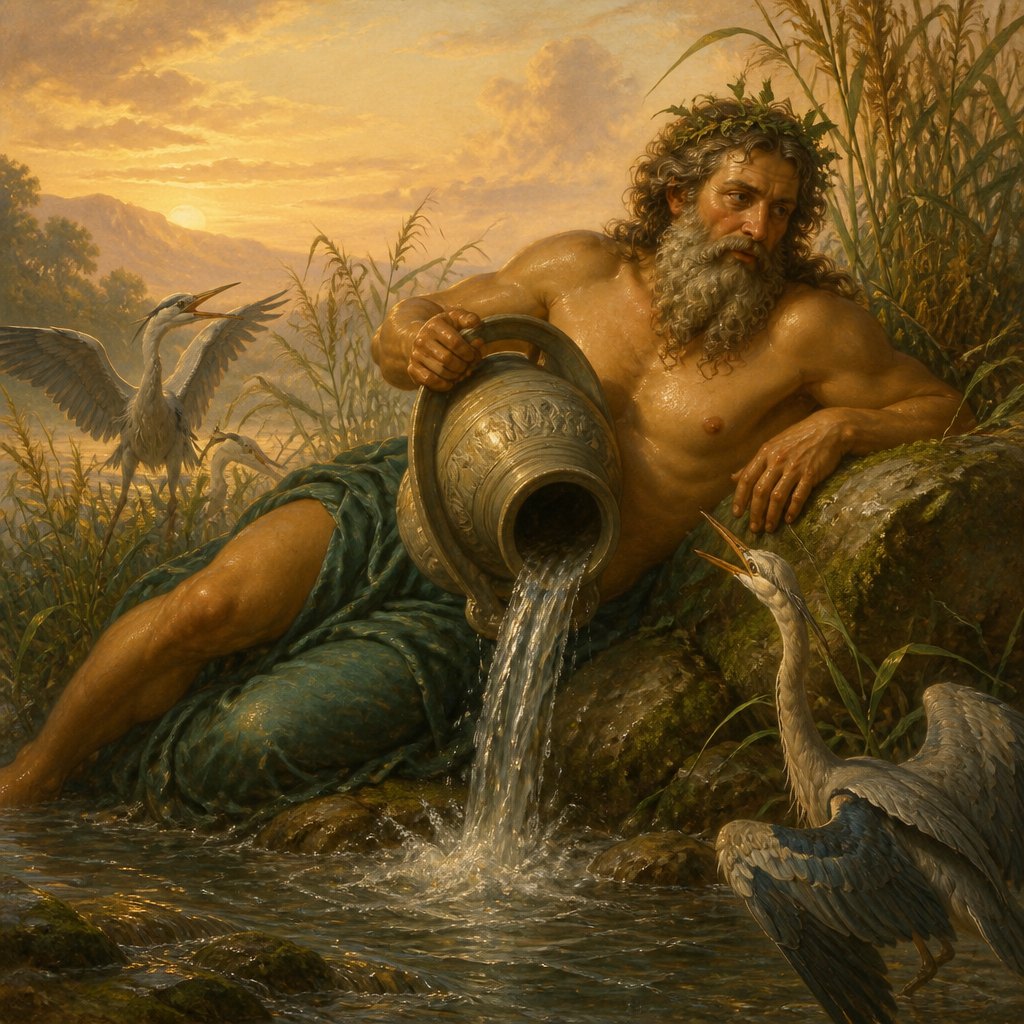 AI-generated
Paint your own
Hang your own mythological art in the salon
This example was generated from a prompt like: “An invented river god reclines against mossy rocks at dawn, urn pouring silver water into a stream, surrounded by reeds and startled herons, painted in the warm, idealized style of classical myth painting.”
Open the Mythological Allegory Renaissance Art Style generator →The genre today
Mythological subjects survive wherever pop culture needs gods and monsters: superhero films borrow Olympian family drama wholesale, video games rebuild Greek and Norse pantheons as playable characters, and fantasy book covers still pose heroes mid-transformation. AI image generators are especially fluent in the genre's shorthand—laurel wreaths, thunderbolts, marble-smooth anatomy—because centuries of paintings trained the visual vocabulary everyone now recognizes instantly, even viewers who have never opened a copy of Ovid.
Compose your own
Pick a single dramatic beat from an invented myth—a confrontation, a chase, a transformation—rather than a whole story. Stage it outdoors, in an idealized grove, riverbank, or ruin-dotted hillside, never a real contemporary setting. Give your central figure one clear attribute—a trident, a bow, a wreath—so viewers can read their role at a glance. Light the scene like late-afternoon sun through leaves, warm and theatrical, with drapery caught mid-motion to suggest speed or divine intervention. Compose in a pyramid or diagonal sweep so the eye follows the action. Keep supporting figures reacting—looking, fleeing, gesturing—rather than posed still, and let one symbolic object anchor the story's meaning.
Frequently asked questions
What is mythological art?
Mythological art depicts scenes and figures from classical mythology—mainly Greek and Roman gods, heroes, and monsters—rather than religious, historical, or everyday subjects, often as a vehicle for depicting the idealized figure and dramatic action.
Why is mythological art often nude?
Classical myth gave painters a scholarly, socially acceptable reason to depict the unclothed body—Venus, nymphs, and gods were understood as literature and antiquity, not indecency, which let artists study anatomy openly.
What's the difference between mythological art and religious art?
Mythological art draws on pagan myth with no doctrinal stakes, letting painters emphasize beauty or drama freely, while religious art depicts sacred narrative meant to instruct or inspire specific faith.
Which myths appear most often in painting?
Ovid's Metamorphoses supplied the bulk of subjects—Apollo and Daphne, Diana and Actaeon, Danaë—alongside Homeric episodes like the Judgment of Paris and the Trojan War.