 Art
Art

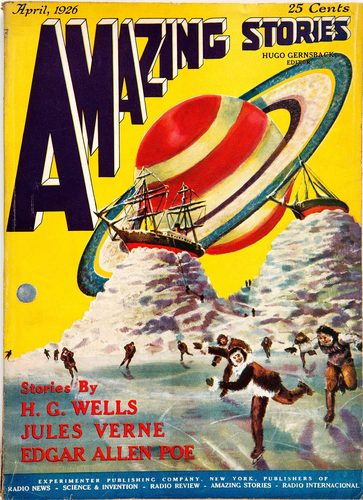
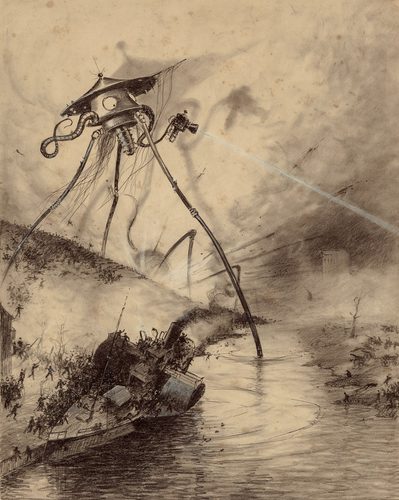
Sci-fi art visualizes speculative technology, alien worlds, and imagined futures—spacecraft, robots, colonized planets, cities either gleaming or in ruins—giving physical form to ideas about where science and society might be heading. Unlike fantasy, which borrows from myth and magic, sci-fi art grounds itself in extrapolated technology and plausible-sounding science, even when the specifics are invented wholesale. The genre emerged alongside science fiction literature in the early twentieth century, first flourishing on pulp magazine covers that needed a single striking image of a rocket or alien landscape to sell an issue off a newsstand rack. It split early into optimistic and pessimistic strands: shining utopian futures full of clean architecture and gleaming technology on one side, and dystopian, industrial, or war-ravaged futures on the other, often reflecting each era's real anxieties about progress, automation, or catastrophe. Space art, a close cousin, focuses specifically on scientifically informed depictions of planets, nebulae, and astronomical phenomena. Across all its branches, the genre treats the future itself as a landscape worth rendering in convincing, tangible detail.
The rules of the genre
Retrofitted Machine Detail
Spacecraft, armor, and machinery are covered in dense mechanical detail—panel lines, rivets, exposed pipes, worn and scratched metal—so technology reads as functional and lived-in rather than smooth and generic, implying decades of use and repair.
Vast Scale Establishing Shots
A small ship, figure, or vehicle is often dwarfed by an enormous structure, planet, or fleet, instantly communicating the scale of the imagined future and the smallness of any single person within it.
Technology as the Light Source
Glowing screens, engine exhaust, neon signage, and energy weapons frequently serve as the scene's primary light source, casting colored illumination across faces and metal, so the technology itself visually announces the setting as futuristic.
Utopia or Dystopia Binary
Sci-fi imagery tends to split cleanly into gleaming, orderly future cities with soaring clean architecture, or ruined, industrial, rain-slicked dystopias choked with cables and smog, with the two extremes reflecting real anxieties about where technology leads.
Internally Consistent Alien Design
Alien creatures, architecture, and technology look genuinely unfamiliar rather than borrowed from earthly myth, but follow their own consistent internal logic—unusual anatomy or structure that still reads as functional rather than arbitrary or random.
Atmospheric Haze and Lens Effects
Dust, fog, steam vents, and lens flare are layered into scenes to add depth and a sense of scale, while screen scanlines or holographic flicker frequently signal that a surface is a display rather than a solid object.
Symbol decoder
How to read a sci-fi art
- Glowing engine trail
- → Signals propulsion technology and motion, giving a stationary image implied speed and direction.
- Holographic display
- → Marks a surface as digital information rather than physical object, shorthand for advanced computing.
- Ruined skyline
- → Signals dystopian collapse, industrial decline, or catastrophe in humanity's technological future.
- Exposed mechanical joint
- → Reveals the inner workings of a robot or suit, emphasizing engineered function over organic form.
- Distant ringed planet
- → Instantly establishes an alien or off-world setting without needing further explanation.
- Neon signage
- → Borrowed urban shorthand for a dense, commercialized, technologically saturated future cityscape.
The story
Sci-fi art grew up alongside science fiction literature, taking shape in the early twentieth century on pulp magazine covers that needed one arresting image—a rocket, a ray gun, an alien landscape—to sell an issue at a newsstand. Mid-century space exploration gave the genre a documentary cousin in space art, where painters worked from real astronomical and engineering knowledge to visualize planets and spacecraft before photography could. Film became the genre's most influential venue in the latter twentieth century, as productions commissioned concept artists to design entire imagined technologies and worlds from scratch, work that shaped public expectations of the future itself for generations. Because it began as commercial illustration for pulp fiction and film, sci-fi art sat entirely outside the Academy's traditional hierarchy, judged by different standards than fine art altogether. Video games later became another major home for the genre, requiring vast, internally consistent visual universes built by teams of concept artists rather than single painters.
Masterpieces of the genre
| Work | Artist | Date | Why it matters |
|---|---|---|---|
| Paintings for The Conquest of Space | Chesley Bonestell | 1949 | Scientifically grounded depictions of planets and space travel that shaped public imagination of the space age before real photographs existed. |
| Concept art for Blade Runner | Syd Mead | 1982 | Industrial-future vehicle and cityscape design that defined dystopian sci-fi visual language for decades. |
| Concept art for Star Wars | Ralph McQuarrie | 1975 | Early production paintings that established the look of an entire film universe before filming began. |
| Amazing Stories cover illustrations | Frank R. Paul | 1920s–1930s | Among the earliest widely circulated science fiction covers, defining rocket and alien-city imagery for the genre's first generation. |
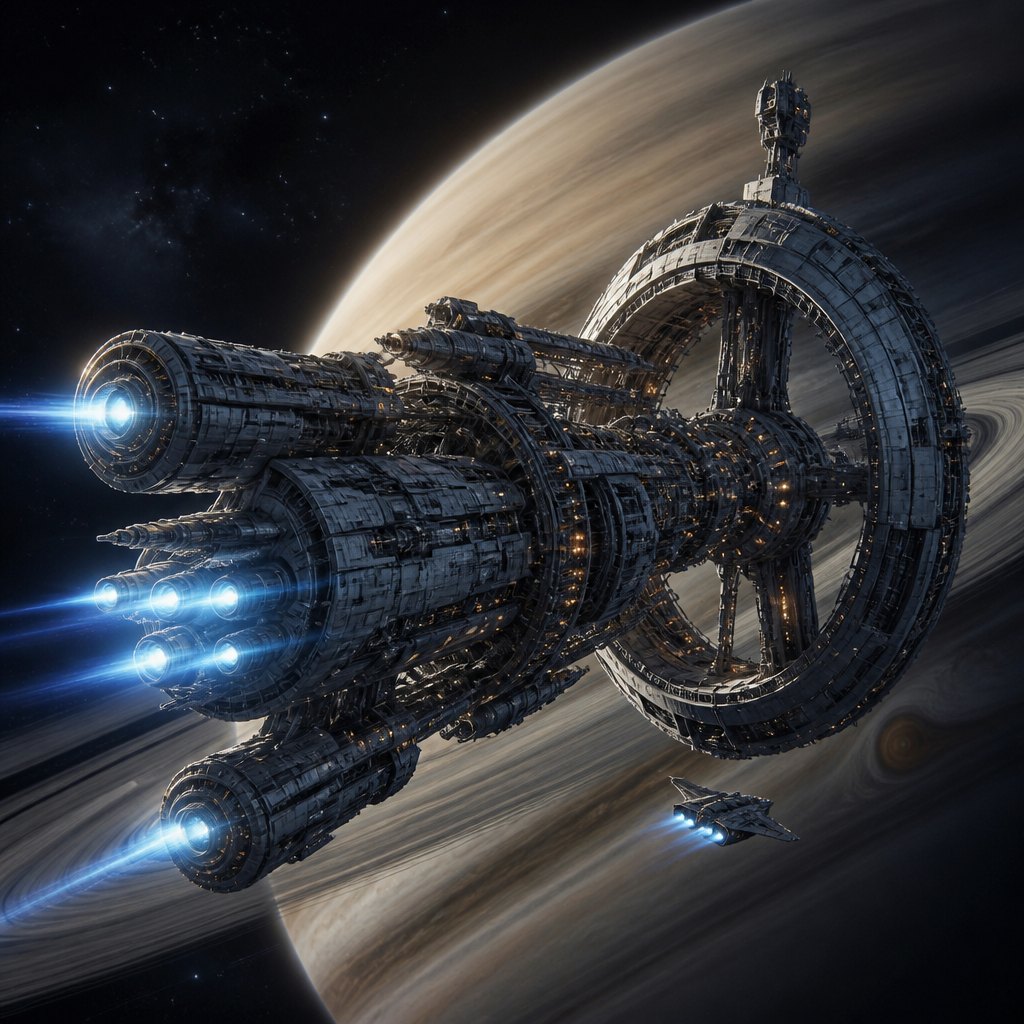 AI-generated
Paint your own
Hang your own sci-fi art in the salon
This example was generated from a prompt like: “A vast futuristic space station orbiting a ringed gas giant, glowing blue engine trails, exposed mechanical framework covered in panel lines and rivets, a small shuttle dwarfed beside it, dramatic rim lighting against the darkness of space.”
Open the Space Opera Sci-Fi Art generator →The genre today
Sci-fi art now drives film and game concept art almost entirely, where teams of artists visualize entire technologies and civilizations before a single frame is filmed or coded. It's also one of the most heavily used categories in AI image generation, since its conventions—glowing tech, vast scale, retrofitted machinery—translate cleanly into text prompts. Real space agencies still commission illustrators for mission visualization when photography isn't yet possible. The genre's dual utopia-dystopia instinct continues shaping how popular culture visually imagines automation, climate change, and space exploration.
Compose your own
Decide first whether the scene leans utopian—clean architecture, soft light, orderly technology—or dystopian—rain, smog, cables, worn surfaces—since mixing the two without intent reads as confused rather than deliberate. Cover any machinery in dense mechanical detail: panel lines, rivets, exposed components, and visible wear that implies years of use. Let technology itself provide the scene's light source, whether a glowing screen, engine trail, or neon sign, and use that light to color the surrounding surfaces. Dwarf any figure against a much larger structure, ship, or landscape to sell scale instantly. Add atmospheric haze, dust, or fog for depth, and keep alien or futuristic elements internally consistent rather than borrowed wholesale from earthly myth or magic.
Frequently asked questions
What is sci-fi art?
Sci-fi art visualizes speculative technology, alien worlds, and imagined futures, from spacecraft and robots to utopian cities and dystopian ruins, grounded in extrapolated science rather than magic.
How is sci-fi art different from fantasy art?
Sci-fi art grounds its imagery in extrapolated technology and plausible-sounding science, while fantasy art draws on myth, magic, and folklore; both invent worlds, but through different logics.
What is space art?
Space art is a closely related genre focused specifically on scientifically informed depictions of planets, spacecraft, and astronomical phenomena, historically used to visualize space exploration before photography could.
Is sci-fi art used in film and games?
Yes—concept art for film and video games is one of the genre's largest modern applications, with artists designing entire technologies and civilizations before production begins.