 Art
Art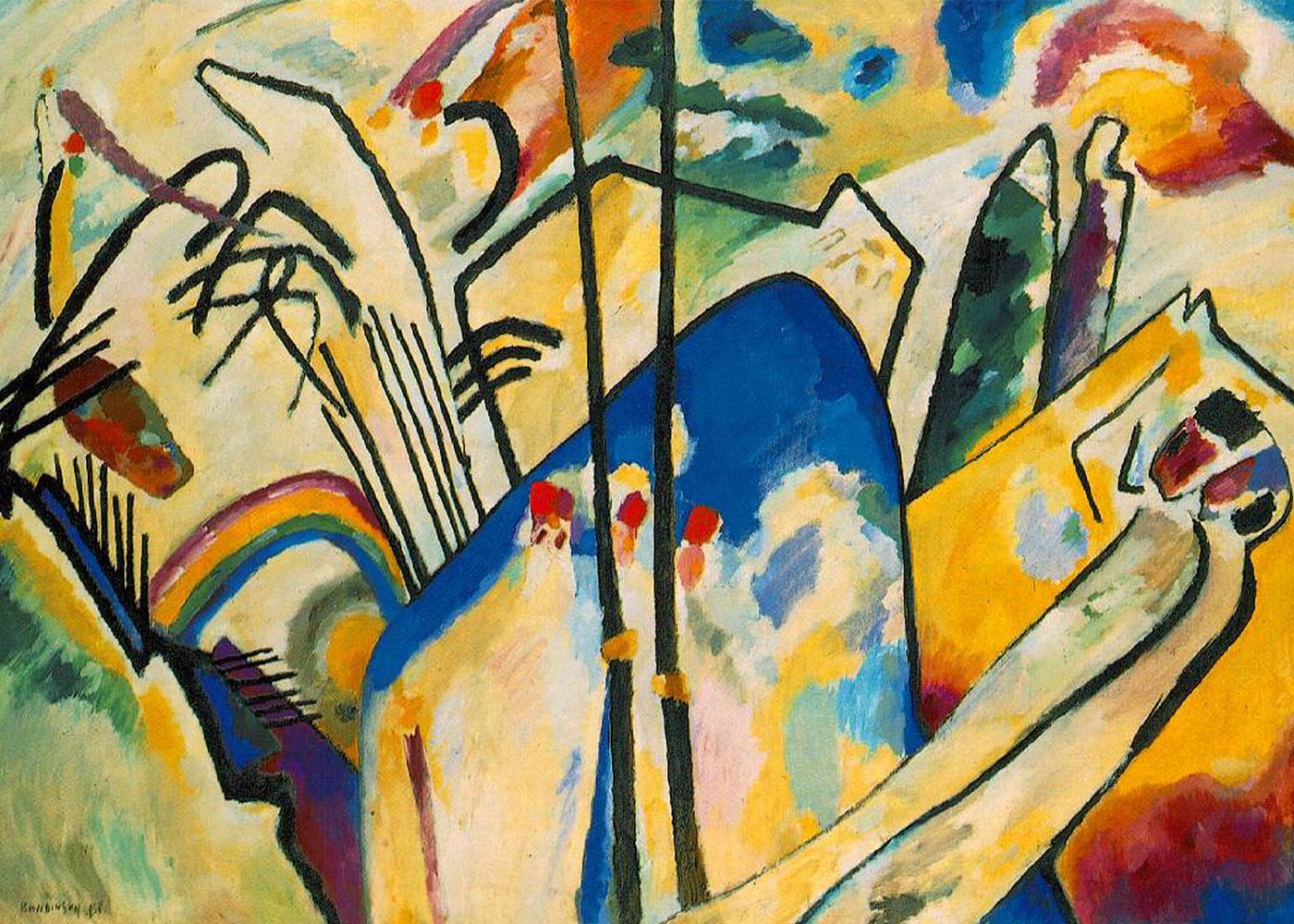
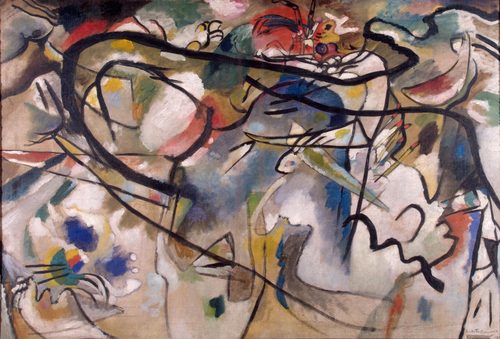
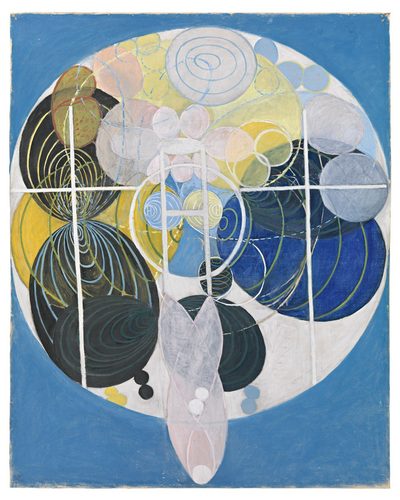
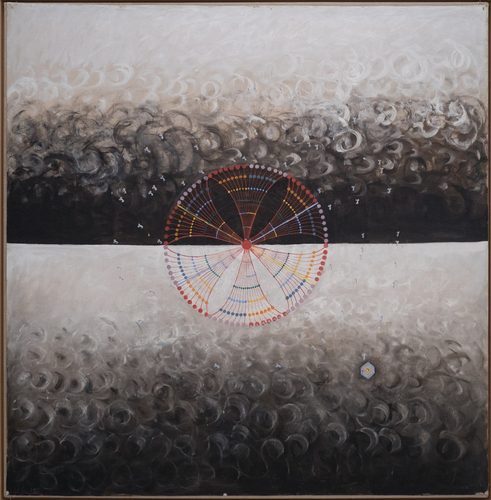
Abstract art is painting or sculpture that makes no attempt to represent a recognizable person, object, or place, offering color, shape, line, texture, and composition as the subject in their own right. It emerged in the early twentieth century as artists pushed past representation entirely, arguing that a painting didn't need to depict anything to carry meaning—that color relationships and gestural marks could communicate emotion, spirituality, or pure visual rhythm on their own terms. Some abstract art is geometric and controlled, built from grids, hard edges, and flat planes of color; some is gestural and improvisational, built from drips, sweeping brushstrokes, or scraped layers that record the artist's physical movement. What unites the genre isn't a look but a refusal: no figure to read, no story to follow, no illusion of space pretending to be a window onto the world. Viewers are asked to respond to the painting as an object and an experience rather than as a picture of something else.
The rules of the genre
Flatness Over Illusion
Instead of tricking the eye into seeing depth, abstract paintings often insist on the flat surface of the canvas itself—no vanishing point, no modeled shadow suggesting three dimensions. Shapes sit on top of the picture plane rather than receding into it, reminding the viewer they're looking at paint, not a window.
Color as Content
Color stops serving description and becomes the subject: a field of saturated red or a careful balance of complementary hues is meant to be felt directly, the way a chord in music is felt, without needing to represent a sunset or a dress.
All-Over Composition
Many abstract canvases avoid a single focal point entirely, spreading marks or color evenly from edge to edge so the eye has nowhere obvious to land and keeps moving. This democratic composition treats every inch of the canvas as equally important.
Visible Process as Subject
Drips, scrapes, brush drags, and reworked passages are left visible rather than smoothed away, turning the finished painting into a record of the physical act of making it. The gesture itself becomes part of what the viewer is meant to read.
Reductive Geometric Vocabulary
Some abstraction strips imagery down to a tight vocabulary of squares, grids, circles, and straight lines in flat, unmodulated color, pursuing order and clarity the way a diagram does. Precision and repetition replace visible brushwork entirely.
Immersive Oversized Scale
Canvases are frequently built large enough to fill the viewer's entire field of vision, so the experience feels physical and enveloping rather than like looking at a framed object on a wall from a polite distance.
Symbol decoder
How to read a abstract art
- Grid
- → Structure, order, and control—a rejection of organic or emotional mark-making.
- Drip or splatter
- → Records the artist's physical movement and chance, prioritizing process over planning.
- Color field
- → A large flat area of single color meant to be experienced directly, almost meditatively.
- Hard edge
- → A crisp boundary between shapes signals precision and industrial clarity over painterly gesture.
- Gestural brushstroke
- → A visible, energetic mark standing in for emotion or the body's motion in the moment.
- Impasto texture
- → Thickly built-up paint asserting the canvas as a physical object, not an illusionistic window.
The story
Abstract art broke from representation in the early twentieth century, as pioneering painters argued that color and form could carry spiritual or emotional meaning without depicting anything recognizable at all. Cubism had already fractured the picture plane; abstraction pushed further, discarding the subject entirely. The movement split into branches—geometric abstraction pursuing order through grids and primary colors, and later, gestural abstraction treating the canvas as an arena for physical, improvisational mark-making. Mid-century New York became a major center for large-scale, emotionally charged abstraction, shifting the art world's center of gravity for the first time toward American painters. The Academy hierarchy, built around depicting recognizable subjects, had no place for pure abstraction at all—it simply existed outside that older ranking system, judged instead on originality, scale, and formal invention. Since then, abstraction has never fully receded, cycling through revivals in painting, digital art, and design.
Masterpieces of the genre
| Work | Artist | Date | Why it matters |
|---|---|---|---|
| Composition VII | Wassily Kandinsky | 1913 | A dense, musical arrangement of color and line credited among the earliest fully abstract paintings. |
| Composition with Red, Blue, and Yellow | Piet Mondrian | 1930 | A grid of black lines and primary color blocks distilling painting to pure order. |
| Autumn Rhythm (Number 30) | Jackson Pollock | 1950 | An all-over drip painting recording the artist's full-body motion across the canvas. |
| Orange and Yellow | Mark Rothko | 1956 | Soft-edged glowing color fields meant to be experienced up close and immersively. |
| Black Square | Kazimir Malevich | 1915 | A single black square on white, abstraction's most radical reduction. |
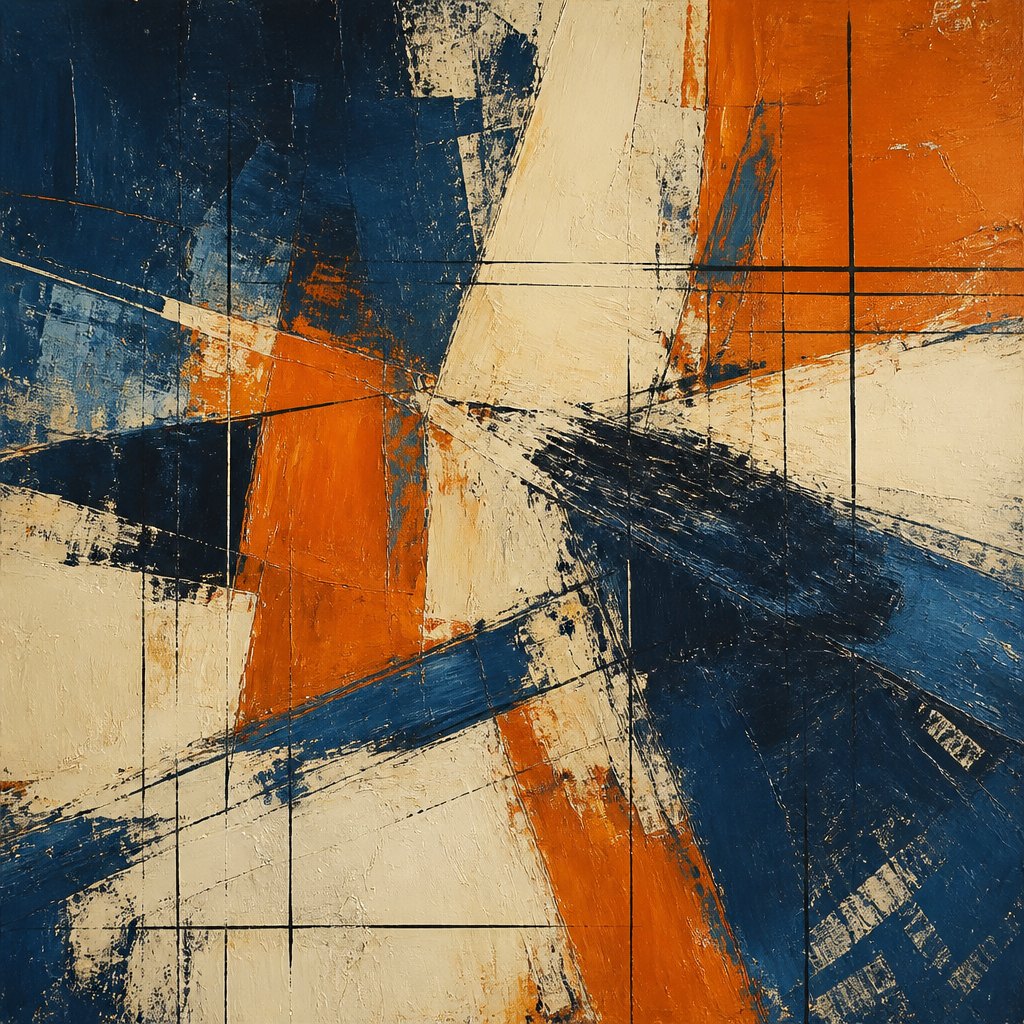 AI-generated
Paint your own
Hang your own abstract art in the salon
This example was generated from a prompt like: “A large abstract composition of overlapping color fields in deep blue, burnt orange, and cream, with loose gestural brushstrokes crossing a grid of thin black lines, thick impasto texture, and no recognizable objects or figures.”
Open the Abstract Art Style generator →The genre today
Abstract conventions now shape design, motion graphics, album covers, and generative art as much as gallery painting. AI image generators readily produce color-field and gestural abstraction on command, often without engaging the philosophical stakes the original painters wrestled with. Abstract patterns also drive data visualization and algorithmic art, where grids and color relationships communicate information rather than emotion. The genre's core bet—that form and color can mean something without depicting anything—remains foundational to how contemporary visual culture treats color, texture, and composition even outside fine art.
Compose your own
Start by picking a mode: geometric and controlled, or gestural and improvisational—the two rarely mix well in one piece. For geometric work, build from a grid or a handful of flat shapes in a tight, deliberate color palette, keeping edges crisp and precise. For gestural work, let marks spread across the whole surface with no single focal point, allowing drips, scrapes, or thick brushwork to stay visible as a record of motion. Either way, avoid any hint of a recognizable object, horizon line, or figure. Push the canvas large enough to feel immersive rather than like a small framed picture. Trust color relationships and surface texture to carry the entire emotional weight of the piece.
Frequently asked questions
What is abstract art?
Abstract art is art that doesn't represent a recognizable person, object, or place, using color, shape, line, and texture as the subject itself rather than tools for depicting something else.
Is abstract art just random shapes and colors?
No—most abstract work follows deliberate compositional choices about balance, color relationship, and scale; the absence of a recognizable subject doesn't mean the absence of structure or intent.
What's the difference between abstract and non-representational art?
The terms are largely interchangeable; some critics reserve 'abstract' for work simplified from a real source and 'non-representational' for work with no real-world reference at all.
Why do some abstract paintings sell for so much?
Value follows rarity, historical importance, and an artist's role in shifting how art was made—the same forces that price any influential artwork, abstract or not.